Self-Unloaders 101: new CSL video explains how self-unloading ships work
Gravity-fed unloaders are highly specialized vessels that can quickly discharge dry bulk cargo without the assistance of shore-side equipment. — Phot
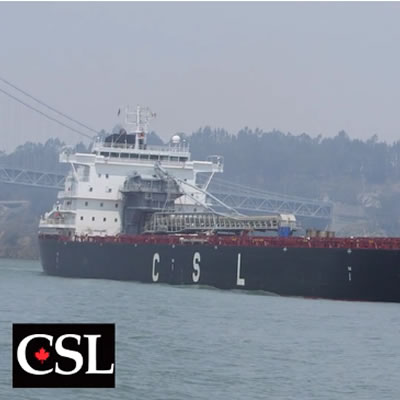
Gravity-fed unloaders are highly specialized vessels that can quickly discharge dry bulk cargo without the assistance of shore-side equipment. — Photo courtesy The CSL Group Inc.
MONTREAL, April 14, 2016 /CNW Telbec/ - Gravity-fed self-unloaders are highly specialized vessels that can quickly and efficiently discharge dry bulk cargo without the assistance of shore-side equipment or personnel.
In a recently released video, CSL demonstrates how these vessels use gravity to release cargo onto conveyor belts through gates located at the bottom of the vessel's cargo holds. The cargo is then transported to an elevating system, lifted above deck level, transferred onto a discharge boom conveyor and offloaded via a discharge boom.
The rapid discharging rate of self-unloaders and their reduced infrastructure and labour requirements make this bulk cargo handling option an effective and competitive solution that helps keep costs down and minimize environmental impacts.
"How a self-unloading ship works" is available on CSL's website at www.cslships.com.
The CSL Group is the largest owner and operator of self-unloading ships in the world. Headquartered in Montreal with divisions operating throughout the Americas, Australia, Europe and Asia, CSL delivers more than 76 million tonnes of cargo annually for customers in the construction, steel, energy and agri-food sectors.
SOURCE The CSL Group Inc.