Discover by Category
Sustainability & Environment.
173 stories
Remediating mine tailings and recovering gold
BacTech Environmental will build North America's first commercial bioleach facility in Manitoba to remediate toxic mine tailings while extracting gold. The $22-million plant will process 100 tonnes per day from a 300,000-tonne arsenopyrite stockpile containing an estimated 92,000 ounces of gold worth $130 million.
Operating with respect for the land
Duz Cho Construction, owned by the McLeod Lake Indian Band, has completed extensive infrastructure and tailings facility construction at the Mount Milligan mine site northwest of Prince George over three years. The company built road access infrastructure and an 8-kilometre earthen dam structure for the tailings storage facility, with the mine scheduled to open in July 2013.
Working Together to Protect the Elk Valley Watershed
Teck announced up to $600 million in investments over five years for water treatment and selenium management in B.C.'s Elk Valley, following a new provincial Area Based Management Plan Order. The company operates five steelmaking coal mines in the region and is constructing its first water treatment plant at Line Creek Operations.
Mining4Life has raised over $11 million for charity
The Mining4Life Charity Challenge, held annually during PDAC in Toronto, has raised over $11 million for children's health charities in its four years of operation. The event brings together 60-80 mining industry companies for a Texas Hold'em poker tournament, with 90% of proceeds supporting SickKids Foundation, SickKids International, and BC Children's Hospital Foundation.
A B.C. company continues its research into environmentally sound mining techniques
Kemetco Research is developing environmentally sound mining technologies including cyanide-free gold recovery, improved cyanide detoxification processes, and biological treatment systems for acid mine drainage. The company's biological sulphide generator operates up to 7 times faster than competing technologies and has been optioned to a major U.S. multinational for demonstration.
Work on the Kitimat Modernization Project is going strong
Rio Tinto Alcan's $3.3-billion Kitimat Modernization Project is progressing well with 17% construction complete as of 2012. The new aluminum smelter will increase production capacity from 280,000 to 420,000 tonnes annually while reducing environmental footprint by 50%.
Bardusan Placers is a leader in environmental stewardship
Bardusan Placers Ltd. received the 2012 Robert E. Leckie Award for Excellence in Environmental Stewardship in Placer Mining from the Yukon Government. The family-operated placer gold mine north of Mayo has been in continuous production since 1958 and has evolved its practices over 30 years to reduce water use, lower energy costs, and meet environmental standards.
Yukon Zinc receives a second Robert E. Leckie Award
Yukon Zinc Corporation won its second consecutive Robert E. Leckie Award for responsible mining practices at the 40th Annual Geoscience Forum. The company's Wolverine zinc-silver mine reached commercial production at 1,020 tonnes per day (60% of designed capacity) in March 2012 and is ramping up to over 80% capacity by year-end. The company plans to reach full production in early 2013 while focusing on water treatment innovations and First Nations employment programs.
A sand-and-gravel company wins for reclamation
R.E. Postill & Sons won the Aggregate Reclamation Award at the 2012 B.C. Mine Reclamation Awards for outstanding environmental restoration work at their Rosebush Pit sand-and-gravel operation near Vernon, B.C. The company has successfully reclaimed 40 of 60 hectares mined since the 1970s, converting the land from Class 4 to Class 2 Agricultural Land and improving water retention for farming operations.
Planning for a mine’s closure—before it opens
Thompson Creek Metals is constructing British Columbia's first major new metal mine in 15 years, the $2-billion Mount Milligan copper-gold project near Mackenzie. The company is implementing comprehensive environmental planning from closure design backwards, featuring zero-discharge water recycling, compact five-square-kilometre footprint, and extensive monitoring programs.
Consultation before action is critical
Indigenous relations expert Bob Joseph warns that many mining companies still fail to understand the critical importance of consultation with First Nations before seeking government permits. Companies that engage First Nations early and secure agreements before applying for permits achieve better outcomes and economic certainty.
Alexco transforms the Keno Hill Silver District with environmental technologies
Alexco Resource Corporation's executives received the prestigious E.A. Scholz Award for successfully reopening the Bellekeno Mine and reviving Yukon's Keno Hill Silver District through innovative environmental management strategies. The Bellekeno Mine produced 2.02 million ounces of silver in 2011 and is currently Canada's only primary silver mine. Alexco is targeting 100 million ounces of silver resources and seven million ounces of annual production within the next decade while managing $50-60 million in environmental liabilities.
Vale breaks ground on a leading-edge project at Copper Cliff
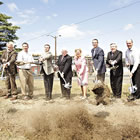
Vale broke ground on its $2 billion Clean AER Project at the Copper Cliff smelter in Sudbury, the largest single environmental investment in the city's history. The project will reduce sulphur dioxide emissions by 70% and dust/metals emissions by 35-40% while creating 1,300 construction jobs at peak. The retrofitted smelter complex will be completed by 2015 and operate well below regulatory limits.
New clean mining association is formed
A new nonprofit industry association called the Clean Mining Alliance has been formed to support and advocate for technological advancements that make mining cleaner and more environmentally responsible. The five founding members include American Manganese, CERM³ at UBC, Kemetco Research, and Nevada Clean Magnesium, focusing on technologies like membrane-based water filtration, hydrometallurgical processes, and closed-loop systems.
Teck plans a Line Creek water treatment facility
Teck Resources announced plans for an $80 million selenium water treatment facility at its Line Creek coal mining operations near Sparwood, BC. The biological treatment facility will address naturally-occurring selenium in mine water, with construction set to begin in July 2012 and annual operating costs of $5 million.
What is a mining consultant?
McElhanney Consulting Services Ltd.'s Prince George branch is providing resource road design services for major mining projects including Copper Fox Metals' Schaft Creek project and Seabridge Gold's Kerr-Sulphrets-Mitchell project in northwestern BC. Senior mining engineer David Pow explains how the consulting business is evolving to focus more on environmental and stakeholder impacts as the permitting process becomes more complex.
From A to zinc: Teck helps prevent disease in the developing world
Teck's Trail Operations, which produces 290,000 tonnes of zinc annually, has launched a comprehensive global health initiative called Zinc and Health to combat zinc deficiency in developing countries. The program includes therapeutic zinc treatments, micronutrient supplements, and food fortification partnerships, with Teck committing $5 million alongside $15 million from CIDA for a $20 million initiative targeting five countries including Senegal, Nepal, and Peru.
Alberta’s Industrial Heartland
Alberta's Industrial Heartland Association promotes Canada's largest petrochemical and hydrocarbon processing centre, covering 582 square kilometres with $35 billion in total investments. The region houses 14 world-scale facilities responsible for 43% of national basic chemical manufacturing and three major petroleum refineries producing 75% of Western Canada's motor fuel.
Playing an important role
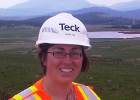
Michelle Unger, Teck's environmental scientist, oversees mine remediation work at 22 properties including the successfully closed Sullivan Mine in Kimberley, B.C. The Sullivan Mine operated for over 100 years until closure in 2001, producing 25.8 million tonnes of concentrates from 150 million tonnes of ore reserves.
Will we have enough water?
The BC Oil and Gas Commission, Geoscience BC, and FLNRO completed a hydrologic modelling study of northeastern B.C.'s water resources to assess water availability for hydraulic fracturing operations. The study found that less than 1% of the Horn River basin's 1.7 billion cubic metres of annual runoff would support 350 unconventional gas wells per year, providing critical data for sustainable water management in the region.
Even better the second time around
Alexco Resource Corporation successfully redeveloped the historic Keno Hill Silver District in Yukon, putting the Bellekeno mine back into production in 2011 as Canada's only primary-producing silver mine. The company combines mining operations with environmental remediation services and plans to identify 100 million ounces of silver and produce over 7 million ounces annually within a decade.
Transforming tailings management in Alberta’s oilsands
Suncor Energy is implementing its TRO (Tailings Reduction Operations) technology with a $1 billion investment to transform oilsands tailings management in Alberta. The breakthrough process reduces tailings reclamation time from decades to weeks by mixing mature fine tailings with polymer and drying them in thin layers. Seven major oilsands companies have formed the Oil Sands Tailing Consortium to collaborate on advancing tailings solutions.
From moonscape to greenscape
Vale donated $4.5 million to establish the Vale Living with Lakes Centre at Laurentian University, which officially opened August 25, 2011, to study northern aquatic systems and environmental remediation. The centre represents a major milestone in Sudbury's transformation from environmental devastation to restoration success, with the region reducing air pollution by 90% since the 1960s and restoring half of its damaged lake trout populations.
Decar project holds groundbreaking potential
First Point Minerals, in partnership with Cliffs Natural Resources, has made a groundbreaking discovery of naturally occurring nickel-iron alloy (awaruite) at its Decar property in central British Columbia. The company has developed innovative selective extraction methods for this 'naturally occurring stainless steel' and completed successful drilling that shows bulk-tonnage, near-surface potential with significant environmental advantages.