Discover by Category
Sustainability & Environment.
173 stories
XPRIZE and COSIA partner to solve the carbon challenge
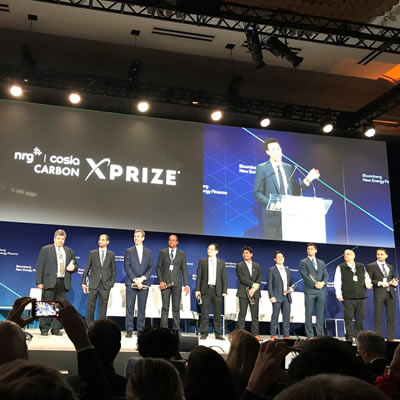
XPRIZE has partnered with Canada's Oil Sands Innovation Alliance (COSIA) and NRG to launch a $20 million competition for converting CO2 emissions from power plants into valuable products. Ten finalist teams are now testing technologies that convert carbon dioxide into bioplastics, concrete materials, methanol, and other useful products.
Innovating a better future
Canadian Natural Resources Ltd. received $5 million from Emissions Reduction Alberta to develop its in-pit extraction process (IPEP) for oilsands operations. The technology places bitumen extraction plants directly in mine pits, reducing greenhouse gas emissions by 40% while eliminating tailings ponds and enabling immediate reclamation.
Can spill response organizations clean up diluted bitumen?
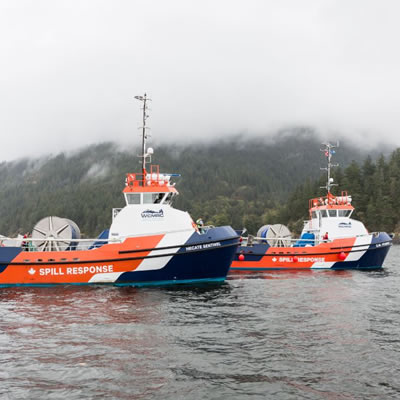
Western Canada Marine Response Corp. details their successful cleanup of a 100,000 litre diluted bitumen spill in Burrard Inlet in 2007, achieving 95% product recovery. The organization emphasizes their readiness to handle future spills with enhanced response capabilities planned for the Trans Mountain pipeline expansion, including doubled fleet capacity and six new response bases.
Low-carbon future is on the horizon in Alberta
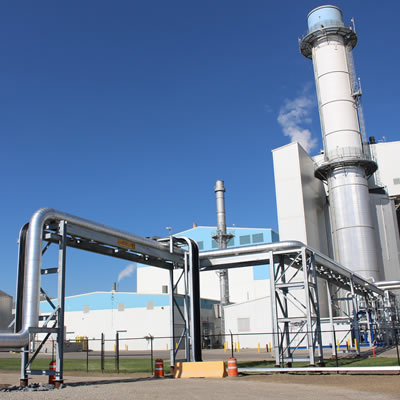
InnoTech Alberta opened the Alberta Carbon Conversion Technology Centre (ACCTC) in June 2018, located next to the Shepard Energy Centre in Calgary. The facility provides 25 tonnes of CO2 per day from natural gas power plant emissions for companies to test carbon capture and conversion technologies. COSIA's five finalist teams from the $20 million NRG COSIA Carbon XPRIZE competition are the first tenants, with the facility opening to other companies in 2020.
Accelerate Kootenays gives electric vehicles a boost in a Canada-first initiative
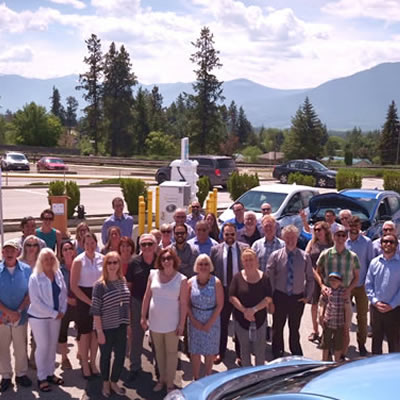
The Accelerate Kootenays initiative has successfully installed 10 of 13 planned fast charging stations and will complete 40 Level 2 charging stations by summer, creating Canada's first regional community-driven electric vehicle network. The $1.8 million project spans over 1,800 kilometres across the Kootenays region and represents an innovative collaboration between multiple government levels and private partners including BC Hydro, FortisBC, and Teck.
Are rare earth elements actually rare?
Mining expert Gavin Mudd from RMIT University explains that rare earth elements are not actually rare despite their name, but face extraction and environmental challenges including radioactive waste management. He will lead discussions on responsible rare earth mining at the upcoming Resources for Future Generations Conference in Vancouver.
Ballard receives purchase order for 40 fuel cell modules to power Van Hool buses in Germany
Ballard Power Systems received a purchase order for 40 fuel cell modules to power Van Hool buses in Germany under the JIVE hydrogen vehicles program. This represents continued commercial traction for hydrogen fuel cell technology in European public transportation.
Sustainability for future generations
The inaugural Resources for Future Generations Conference (RFG2018) will bring together thousands of global participants from June 16-21, 2018 in Vancouver to address energy, minerals and water challenges for future generations. The event represents an unprecedented collaboration between major geological and mining organizations to create cross-sector solutions for meeting the needs of a growing global population.
PDAC 2018 Convention exceeds 25,000 attendees
The PDAC 2018 Convention in Toronto exceeded 25,000 attendees, reaching 25,606 participants from over 125 countries, signaling a recovery and renewed confidence in the mineral exploration and mining industry. The event featured sold-out exhibitor space and hosted the International Mines Ministers Summit with 26 mining ministers.
Hudson’s Hope: Another “off-the-grid” first for B.C.
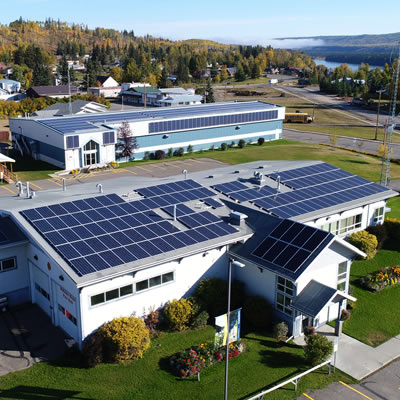
Hudson's Hope has become the first municipality in British Columbia to power its municipal buildings entirely with solar energy. This represents a significant milestone in municipal renewable energy adoption in the province.
Switch to biomass cuts costs and GHG emissions in Yellowknife
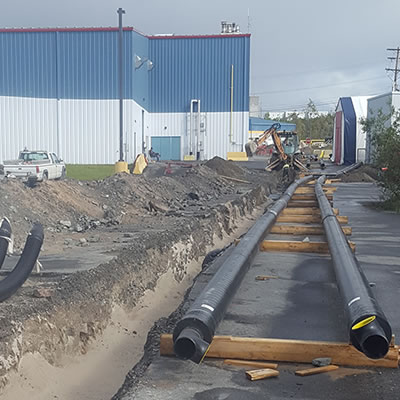
The City of Yellowknife has implemented a Biomass District Energy System that replaces heating oil with wood pellets for five municipal buildings. The system is expected to reduce GHG emissions by 829 tonnes annually and save the city $140,000-$160,000 per year while supporting local wood pellet production.
Increasing global demand for graphite
Ontario Graphite is working to restart the Kearney Mine in Ontario, which holds 43.5 million tonnes of measured and indicated graphite resources and is described as the largest confirmed graphite resource in North America. The company is currently raising capital to complete construction and move into production at the mine, which has a projected 30-year life and will produce various sizes of natural graphite flakes for battery and premium applications.
Kootenay West gypsum mine granted an environmental assessment certificate
CertainTeed Gypsum Canada Inc. has received an environmental assessment certificate for its Kootenay West gypsum mine in British Columbia, a 135-hectare open-pit operation expected to produce 400,000 tonnes annually over 43 years. The project will replace the company's existing Windermere Operations near Invermere and includes extensive environmental protections developed in collaboration with the Ktunaxa Nation and Shuswap Indian Band.
An emerging leader: Alexander Palkovsky
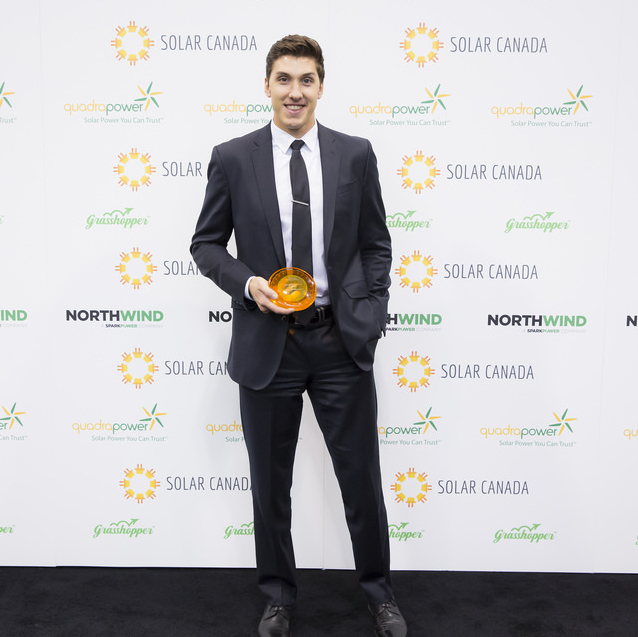
Alexander Palkovsky was recognized as the 2023 Emerging Solar Leader by the Canadian Solar Industries Association after less than three years in the solar industry. He recently joined Brookfield Renewable's Emerging Leaders Program to help replicate successful North American renewable energy models internationally. His career progression from Solar Flow Through Funds to Brookfield demonstrates his commitment to scaling sustainable energy solutions globally.
A green debate
Canada's National Contact Point dismissed a complaint by the Southeast Alaska Conservation Council against Seabridge Gold's KSM project environmental assessment process. The NCP found that Seabridge had properly disclosed environmental studies, engaged with Alaskans during the assessment process, and followed rigorous environmental review procedures. KSM is described as Canada's largest gold reserve and a proposed 52-53 year mine life project located 65km north of Stewart, BC.
Rock Star Merran Smith: Creating a cleaner tomorrow
Merran Smith, executive director of Clean Energy Canada and co-chair of BC's Climate Solutions and Clean Growth Advisory Council, discusses Canada's advantages in the global clean energy transition. She emphasizes that Canada is well-positioned with abundant metals and minerals needed for clean energy infrastructure, plus leadership in clean electricity generation.
Exploring eDNA
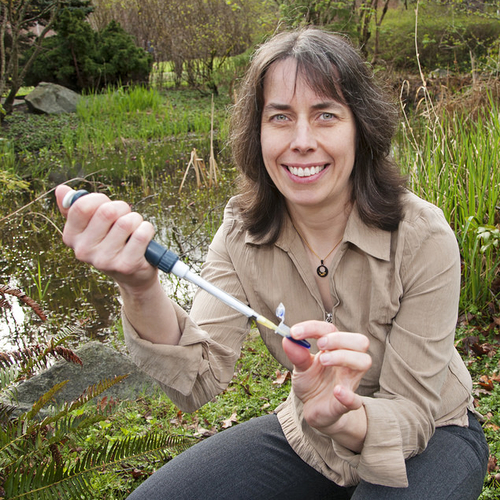
The BC Innovation Council awarded $185,000 to University of Victoria researcher Dr. Caren Helbing to develop standardized environmental DNA (eDNA) monitoring techniques for the mining and energy sectors. The three-year project aims to improve species detection accuracy for environmental assessments, particularly for threatened and endangered species, by developing more reliable methods than traditional field surveys.
Major renewable energy company focuses on Alberta
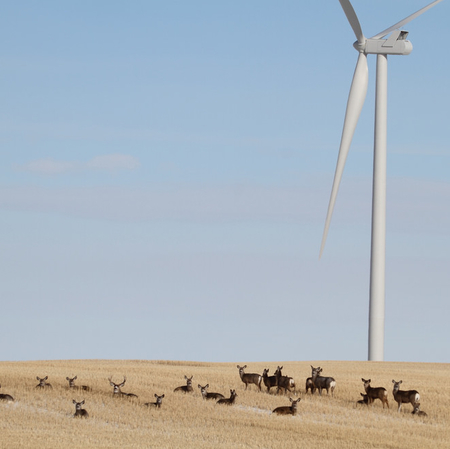
EDF EN Canada is developing the Vulcan Solar Energy Project adjacent to its existing 300-megawatt Blackspring Ridge Wind Farm near Lethbridge, leveraging shared infrastructure to reduce costs. The company is positioning itself for Alberta's Renewable Energy Program, which aims to procure 5,000 megawatts of renewable capacity with the first round allocating 400 megawatts.
Federal government to invest almost $1 billion to encourage more job-creation by Canadian companies
The Canadian federal government announced a $950 million Supercluster program to create innovation hubs and jobs, with mining organizations CEMI and CMIC making the shortlist for their CLEER proposal focused on sustainable, zero-waste mining. The program received 50 proposals representing over 1,000 firms, with five winners to be selected in early 2018 for funding over five years.
Introducing Ice Storm90™
Coulson Ice Blast has developed Ice Storm90™, an environmentally friendly industrial cleaning technology that uses standard ice cubes and reduces water usage by 95% compared to pressure washers. The company has found strong market demand in mining operations where stringent environmental regulations and water-sensitive areas make traditional cleaning methods problematic.
Op-Ed: Beware the false profits of ‘green energy’ peddlers
An op-ed warns against expensive renewable energy contracts based on Ontario's experience, where wind and solar deals caused power bills to double. The author advocates for B.C.'s Site C hydroelectric dam as a more reliable and affordable energy source than wind and solar alternatives.
BC Innovation Council awards $735,000 to fund market-driven research
The BC Innovation Council awarded $735,000 through its BCIC Ignite Awards program to four British Columbia research projects focused on environmental monitoring, structural engineering, wastewater treatment, and life sciences. The awards support industry-driven academic research that must be commercially viable and market-ready within three years.
Bringing bidirectional chargers to mine sites
Heron Canada and SkyPath Energy are developing bidirectional electric vehicle charging systems that integrate with renewable microgrids at mine sites. The technology allows electric vehicles to serve as mobile battery components, transporting solar-generated power around remote mining operations while supporting surrounding Indigenous communities.
Avalon Advanced Materials goes after green
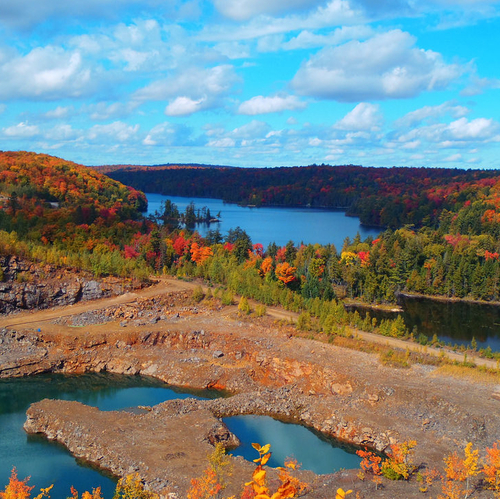
Avalon Advanced Materials is implementing comprehensive sustainability initiatives at its Separation Rapids Lithium Project in Kenora, Ontario, focusing on green energy alternatives and environmentally friendly processing technologies. The company has completed its Preliminary Economic Assessment and is exploring hydroelectric power, solar, and wind options while developing innovative processing methods like optical sorting to reduce energy consumption.