Discover by Category
Saskatchewan.
Mining in Saskatchewan centres around two major commodities: potash and uranium. Saskatchewan is the second largest producer of potash in the world and, according to the Saskatchewan Mining Association, the province is the world leader in...
102 stories
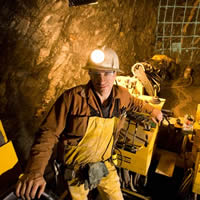
First uranium concentrate produced from ore mined at Cigar Lake
Cameco announced that the McClean Lake mill has begun producing uranium concentrate from ore mined at its Cigar Lake operation in northern Saskatchewan, marking a major milestone for one of the world's richest uranium deposits. The mill is expected to produce up to 1 million pounds of uranium concentrate from Cigar Lake ore in 2014, ramping up to 18 million pounds annually by 2018.
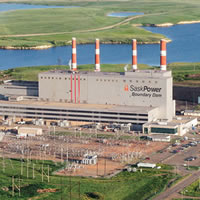
SaskPower launches world’s first commercial CCS process
SaskPower officially opened the world's first commercial-scale carbon capture and storage (CCS) process on a coal-fired power plant at Boundary Dam Power Station in Estevan, Saskatchewan. The facility will capture up to one million tonnes of carbon dioxide annually while continuing to power 100,000 homes using clean coal technology.
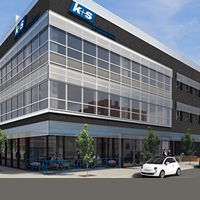
K+S Potash Canada celebrates grand opening of new corporate headquarters
K+S Potash Canada opened a new 40,000 square-foot corporate headquarters in downtown Saskatoon, housing approximately 100 employees and contractors. The move demonstrates the company's long-term commitment to Saskatchewan as it develops the Legacy Project, a solution potash mine under construction near Bethune with over 1,100 workers currently on site.
Canadian Nuclear Safety Commission (CNSC) request to licensees with tailings facilities
The Canadian Nuclear Safety Commission issued an urgent request to seven licensees with tailings facilities following the Mount Polley tailings dam breach in British Columbia on August 4, 2014. Companies including AREVA, Cameco Corporation, and Denison Mines must review their tailings dam safety cases and confirm compliance by September 15, 2014.
North Arrow Minerals exploring for diamonds in Saskatchewan
North Arrow Minerals completed a till sampling program at its Pikoo diamond project in Saskatchewan, collecting 441 samples over four weeks. The program follows up on the 2013 discovery of diamond-bearing kimberlite, with the most significant discovery being PK 150 kimberlite that returned 745 diamonds from a 209.7-kilogram sample. Follow-up drilling is planned for fall 2014 and winter/spring 2015.
SaskPower puts carbon capture technology to the test
SaskPower is implementing the world's first commercial carbon capture and storage (CCS) technology at its Boundary Dam Power Station Unit 3 in Estevan, Saskatchewan. The project will capture approximately one million tonnes of CO2 annually, with most being sold to oil companies for enhanced oil recovery operations. This represents a critical response to federal regulations requiring old coal-fired plants to either install CCS technology or shut down by 2020-2030.
Fission CEO calls Patterson Lake South drill results “very solid”
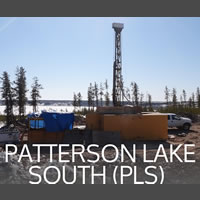
Fission Uranium reported high-grade uranium assay results from its Patterson Lake South property in Saskatchewan's Athabasca Basin, with hole PLS14-164 returning exceptional grades of 21.20% U3O8 over 7.0m. The company's CEO described the results as 'very solid' and noted continued high-grade growth at the shallow R780E zone. The winter drill program results are encouraging the company as it prepares for its summer drilling campaign.
Ore production begins at Cigar Lake
Cameco has begun ore production at its Cigar Lake uranium mine in northern Saskatchewan, marking a significant milestone for one of the world's most technically challenging mining projects. The mine will reach full production capacity of 18 million pounds of uranium annually by 2018, using an innovative jet boring system developed specifically for this high-grade deposit.
K+S Potash Canada and AMEC sign long-term contract for Legacy Project
K+S Potash Canada signed a long-term design and project management contract with AMEC for the Legacy Project, a solution potash mine located 50 km north of Moose Jaw, Saskatchewan. The project has a $4.1 billion CAD capital expenditure budget and commissioning is targeted for 2016, representing the first new greenfield potash mine in Saskatchewan in nearly 40 years.
Saskatchewan approves $200 million metals processing plant
Saskatchewan's environment minister has conditionally approved Fortune Minerals' $200 million metals processing plant in Langham, following a favorable environmental assessment. The facility will process concentrates from Fortune's proposed NICO mine in the Northwest Territories, with annual production capacity of 40,500 ounces of gold, 1,600 tonnes of cobalt, 1,700 tonnes of bismuth and 250 tonnes of copper.
Prospecting award goes to Saskatchewan uranium discovery
Ross McElroy, president of Fission Uranium, received the 2014 Bill Dennis award from PDAC for discovering the Patterson Lake South uranium deposit in Saskatchewan's Athabasca Basin. The high-grade, shallow discovery has rejuvenated regional exploration interest, with about 20 junior companies now holding significant land positions in the area.
Karnalyte Resources gets started on a $600 million project
Karnalyte Resources received environmental approval to proceed with construction of its $600 million Wynyard Carnallite Project in Saskatchewan, which aims to produce 625,000 tonnes of potash annually in Phase 1, expanding to 2.125 million tonnes. The company claims to have discovered the world's largest potash deposit with 45 metres of high-grade ore seams and 156 million tonnes of proven and probable reserves.
Plenty of potential in the mining industry
Women in Mining and Women in Nuclear Saskatchewan held their inaugural 'Mine your Potential' development event on October 22, 2013, aimed at attracting more people, especially women, to Saskatchewan's natural resources sector. The event addressed the fact that women currently make up only 14% of the mining industry workforce and provided networking and educational opportunities.
Vale Potash Canada wraps up open house meetings for the Kronau Project
Vale Potash Canada completed community open house meetings for its Kronau Project, a proposed greenfield potash mine near Regina that would produce 2.9 million tonnes annually. The project is nearing completion of Saskatchewan's environmental assessment process and could begin construction in 2015 if funding is secured.
The University of Saskatchewan and IMII announce innovative funding agreement
The University of Saskatchewan and the International Minerals Innovation Institute announced a $1.67 million funding agreement to develop five new mining courses and create three undergraduate mining options in engineering. The initiative addresses critical skills shortages driven by $40-50 billion in announced mining expansions and new projects across Saskatchewan.
Draft recommendations on implementing mandatory reporting standards released
The Revenue Resource Transparency Working Group released draft recommendations on June 14, 2013, for implementing mandatory reporting standards for Canadian mining companies. The collaborative effort between industry groups and civil society aims to create transparency in mining company payments to governments, with public consultation extended until September 2013.
Keeping Saskatchewan’s proposed new potash mine clean and green
Western Potash Corporation's Milestone project represents Saskatchewan's first new potash mine in over four decades, featuring an innovative agreement with Regina to use 60,000 cubic metres per day of recycled city effluent as the primary water source. The project is moving from feasibility into environmental assessment and funding stages, with construction planned for 2013 and expected to employ 1,500 people during construction and 350 permanently.
Claude Resources pours its one millionth ounce of gold at Seabee
Claude Resources announced pouring its one millionth ounce of gold at the Seabee Gold Operation in Saskatchewan in August 2012, becoming the first gold mine in the province to reach this milestone. The company has been in production since 1991 and operates two ore bodies, with over 900,000 ounces coming from the original Seabee ore body.
Structures designed with the mining industry in mind
Norseman Structures won the North Saskatoon Business Association Business Builder Export Award after acquiring Cover-All Building Systems in 2010. The company specializes in modular maintenance buildings and fabric structures for mining and oil & gas operations, with over 200,000 square feet of manufacturing capacity.
SRK Consulting sees huge potential in Saskatchewan
SRK Consulting has expanded operations in Saskatchewan with a Saskatoon office serving the growing potash and uranium industries. The company offers comprehensive mining consulting services from exploration to closure and sees tremendous long-term opportunities in Saskatchewan's resource sectors.
New agreement makes it easier to sell Saskatchewan uranium to China
Canada announced a new agreement to substantially increase uranium exports to China, benefiting Saskatchewan producers like Cameco. The company already has long-term contracts for 52 million pounds of uranium with Chinese buyers through 2025. China's plan for 52 new nuclear reactors by 2021 could account for 25% of world uranium demand.
Fission Energy
Fission Energy Corp, led by CEO Dev Randhawa, has built a successful uranium exploration company focused on Saskatchewan's Athabasca Basin. The company has discovered significant high-grade uranium deposits at Waterbury Lake, including intersections up to 45.2% U3O8, and established a preliminary resource estimate of 7.37 million pounds indicated uranium.
Cameco’s creative innovation
Cameco successfully completed an innovative remediation project at the Cigar Lake uranium mine in Saskatchewan after water inflows in 2006 and 2008 forced mine flooding. The company used custom Remote Operating Vehicles (ROVs) and inflatable tunnel seals to repair the mine underwater, earning a 2011 engineering award.
High hopes for isotopes
Uravan Minerals is pioneering an innovative uranium exploration technique using lead isotope ratios to identify drill targets in the Athabasca Basin. The company has conducted research at the Cigar Lake deposit and is now applying this geochemical approach to drill targets at its Outer Ring project, potentially revolutionizing exploration methods in the basin.