
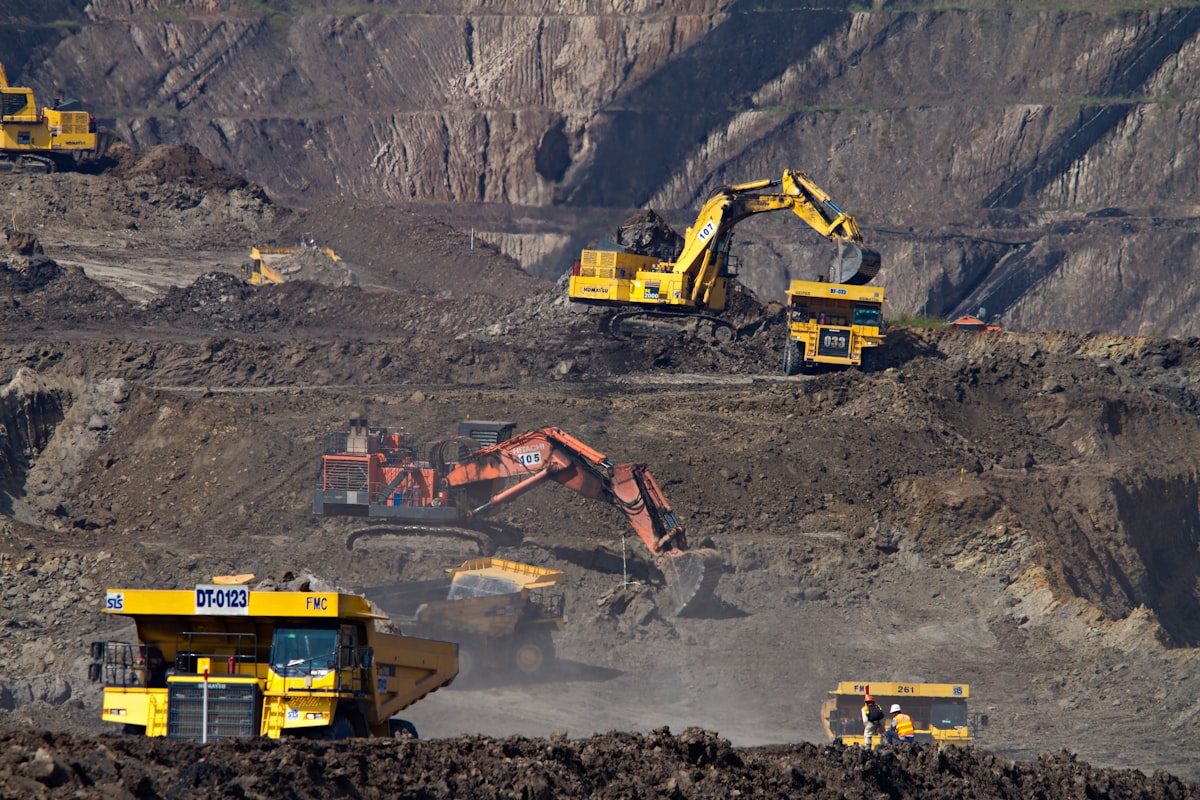
Premium Editorial — March 2026
Canada's Critical Minerals:
The Resource Superpower
Canada holds 34 critical minerals, ranks first in potash and second in uranium, and is building the allied supply chains the world needs to break free from concentrated dependence on China. This is everything Canada has on offer.
"Canada has what the world wants. We are an energy superpower. We hold vast reserves of critical minerals."
— PM Mark Carney, Davos, January 2026
The Carney Doctrine
"Build, baby, build." Canada's PM has positioned the country as an energy superpower with critical minerals as the centrepiece — diversifying partnerships beyond the US while leveraging resources as geopolitical currency.
The China Problem
China controls 90% of rare earth processing, 98% of gallium, and 90%+ of battery-grade graphite. Since 2023, Beijing has imposed escalating export controls on gallium, germanium, graphite, antimony, tungsten, and rare earths — weaponizing mineral supply chains.
The Allied Response
Canada launched the G7 Critical Minerals Production Alliance during its 2025 G7 Presidency. In March 2026, $18.5 billion in Canadian mineral projects have been mobilized with 12 allied nations. Australia, Japan, India, and the EU have signed partnerships.
The 34 Minerals
Canada's Critical Mineral Advantage
Twelve minerals that define Canada's strategic position — from world-leading potash and uranium to the battery metals and rare earths the energy transition demands.
Uranium
Province
Saskatchewan
Production
~15% of global output
Key Players
Cameco, Orano
Reserves
3rd largest globally
Saskatchewan's Athabasca Basin contains the world's largest high-grade uranium deposits. Cameco's McArthur River/Key Lake complex set a world record in 2024, producing 20.3 million lbs of U₃O₈ — more than any uranium mill in history. Cigar Lake produced 19.1 million lbs in 2025, exceeding forecasts.
2025–2026 Update
With 30+ countries pledging to triple nuclear capacity by 2050 and AI data centres driving unprecedented electricity demand, Canadian uranium has never been more strategically valuable. Canada exports to the US, EU, Japan, South Korea, and India.
Demand driver: Nuclear renaissance — 30+ countries pledging to triple capacity by 2050
Potash
Province
Saskatchewan
Production
15M tonnes (2024)
Key Players
Nutrien, Mosaic, K+S, BHP
Reserves
#1 globally — 1.1B tonnes
Canada holds the world's largest potash reserves — 1.1 billion tonnes out of a global total of 4.8 billion. Ten underground mines in southern Saskatchewan supply roughly one-third of the global potash market. Exports of 22.9 million tonnes in 2024 accounted for over 39% of global trade.
2025–2026 Update
BHP's Jansen mine — one of the largest mining investments in global history — expects Stage 1 production in mid-2027 at 4.2 million tonnes per year, with Stage 2 doubling capacity to 8.5 million tonnes by 2031. Saskatchewan forecasts $8.4 billion in potash sales for 2025-26.
Demand driver: Global food security — potash is essential for crop yields worldwide
Nickel
Province
Ontario, N.L., Manitoba
Production
~190,000 tonnes (2024)
Key Players
Vale, Glencore
Reserves
#8 globally
The Sudbury Basin, formed by a meteorite impact nearly two billion years ago, hosts one of the world's most significant polymetallic mining complexes. Vale's five underground mines and Glencore's Sudbury INO operations produce nickel, copper, cobalt, and platinum group metals. Vale's Voisey's Bay in Labrador completed its US$2.94 billion underground expansion.
2025–2026 Update
Vale and Glencore signed an agreement in December 2025 to jointly evaluate a brownfield copper development at Nickel Rim South, potentially producing 880,000 tonnes of copper over 21 years. Ontario accounts for 39.4% of national nickel output, Newfoundland 27.1%.
Demand driver: EV batteries — nickel-rich cathodes dominate high-performance EVs
Lithium
Province
Quebec, Alberta, Ontario
Production
Pre-commercial (ramping)
Key Players
Sayona, Nemaska/Rio Tinto, E3 Lithium, Frontier Lithium
Reserves
14M tonnes Li₂O (hard rock + brine)
Canada's lithium resources are split between hard-rock spodumene deposits in Quebec and Ontario (5.4 million tonnes Li₂O) and lithium brine in Alberta and Saskatchewan oil fields (8.6 million tonnes). Sayona Mining's North American Lithium near Val-d'Or is Canada's only active lithium mine, producing 155,000+ tonnes of spodumene concentrate annually.
2025–2026 Update
Nemaska Lithium (Rio Tinto / Quebec) is building a 34,000-tonne lithium hydroxide refinery at Bécancour with an offtake deal with Ford Motor Company. E3 Lithium's Clearwater Project near Olds, Alberta holds Canada's first proven brine reserve (1.13 Mt LCE). Frontier Lithium signed an MOU with Panasonic Energy.
Demand driver: Demand projected to grow 5× by 2040 (IEA) — deficit expected by the 2030s
Copper
Province
B.C., Ontario
Production
514,000+ tonnes (2024)
Key Players
Teck, Hudbay, Newmont, Vale
Reserves
Significant expansion projects
British Columbia accounts for 45.8% and Ontario 43.7% of Canada's copper production. Teck's Highland Valley Copper is the nation's largest copper mine, with a $2.1–$2.4 billion mine life extension approved in 2025 pushing operations to 2046. The Red Chris block cave expansion (Newmont, C$2.6 billion) could add 12–15 years of mine life.
2025–2026 Update
Copper faces the most concerning supply gap of any critical mineral — the IEA projects mine supply will meet only 70% of requirements by 2035. Every EV contains ~53 kg of copper, and grid investments consumed 12.5 million tonnes globally in 2025 alone.
Demand driver: Most critical supply gap — 30% deficit projected by 2035 (IEA)
Aluminum
Province
Quebec
Production
3.3M tonnes (2024)
Key Players
Rio Tinto, Alcoa, Alouette
Reserves
Smelter-based (bauxite imported)
Quebec's nine smelters produce 90% of Canada's aluminum and 60% of North American output — with the world's lowest carbon footprint, powered almost entirely by hydroelectricity. The Alouette smelter in Sept-Îles is the largest in Canada at 623,000 tonnes per year.
2025–2026 Update
Rio Tinto's C$1.4 billion AP60 smelter expansion at Complexe Jonquière is adding 160,000 tonnes per year, commissioning in H1 2026. ELYSIS — a breakthrough joint venture between Rio Tinto, Alcoa, Apple, and the governments of Canada and Quebec — has developed inert anode technology that eliminates direct greenhouse gas emissions from smelting.
Demand driver: Defence, aerospace, EVs, data centres, and grid infrastructure
Graphite
Province
Quebec
Production
Scaling up
Key Players
Nouveau Monde, Northern Graphite
Reserves
Significant deposits
Graphite is the single largest component by weight in a lithium-ion battery anode. China controls over 90% of battery-grade graphite processing — making Western supply chains acutely vulnerable. Northern Graphite's Lac des Îles in Quebec is the only active natural graphite mine in North America.
2025–2026 Update
Nouveau Monde Graphite's Matawinie Mine has been referred to the federal Major Projects Office for streamlined approvals. The company plans to produce 106,000 tonnes per year over 25 years and has offtake agreements with the Government of Canada, Panasonic, and Traxys. NMG has received a letter of interest for up to US$430 million from Export Development Canada.
Demand driver: Demand projected to double by 2040 — 90%+ of battery-grade from China
Rare Earth Elements
Province
N.W.T., Quebec, Saskatchewan
Production
Early-stage
Key Players
Vital Metals, Torngat, SRC
Reserves
Multiple advanced projects
China controls approximately 90% of global rare earth processing and 99% of heavy rare earth refining. Canada is building alternatives. Vital Metals' Nechalacho mine in the Northwest Territories is one of Canada's first REE-producing operations. The Saskatchewan Research Council operates North America's first rare earth processing facility.
2025–2026 Update
The SRC facility can produce 400 tonnes per year of neodymium-praseodymium (NdPr) — essential for permanent magnets in EVs, wind turbines, and defence systems. Rio Tinto is expanding scandium production in Sorel-Tracy, Quebec, with $25 million from the Canada Growth Fund. Torngat Metals is advancing the Strange Lake project in Quebec.
Demand driver: EV motors, wind turbines, defence — 50-60% demand growth by 2040
Cobalt
Province
Quebec, Ontario, N.L.
Production
~4,600 tonnes (2025 est.)
Key Players
Vale, Glencore
Reserves
#3-4 globally
Canada's cobalt is produced primarily as a byproduct of nickel mining in Sudbury, Voisey's Bay, and Thompson. Despite accounting for just 1.2% of global output, Canada holds the world's third or fourth largest cobalt reserves — a significant strategic asset as battery demand grows.
2025–2026 Update
China controls over 60% of global cobalt refining. Canada's integrated nickel-cobalt operations offer a vertically integrated alternative for Western battery supply chains. Quebec accounts for 35%, Ontario 33%, and Newfoundland 28% of national output.
Demand driver: EV battery cathodes — demand growing 50-60% by 2040
Niobium
Province
Quebec
Production
8-10% of global supply
Key Players
Magris Resources (Niobec)
Reserves
One of 3 global sources
The Niobec mine at Saint-Honoré in Saguenay, Quebec has been in production since 1976 and is the only niobium mine outside Brazil. Niobium is used in high-strength low-alloy steels for bridges, pipelines, and aerospace applications. There are only three commercial niobium producers in the world.
2025–2026 Update
Canada supplies 71% of US potash consumption, 26% of US niobium, and is the largest foreign source of several critical minerals. With niobium oxide trading at approximately US$58,000 per tonne, the Niobec mine is a globally significant strategic asset.
Demand driver: High-strength steel, aerospace, superconductors
Chromite
Province
Ontario (Ring of Fire)
Production
Pre-production
Key Players
Wyloo Metals (Ring of Fire Metals)
Reserves
One of largest deposits globally
The Ring of Fire in the James Bay Lowlands of far northern Ontario contains one of the world's largest undeveloped chromite deposits — a mineral with no known substitutes in stainless steel production and aerospace alloys. Wyloo Metals acquired Noront Resources for $616.9 million in 2022.
2025–2026 Update
In February 2026, the federal government declined to designate the Eagle's Nest nickel project for an impact assessment — a major regulatory milestone. The feasibility study is "pretty much complete," with mine construction planned for 2027 and production targeted for 2030. Access road construction is expected to begin as early as August 2026.
Demand driver: No substitutes in stainless steel — essential for defence and aerospace
Helium
Province
Saskatchewan
Production
3.4M m³ (2023)
Key Players
North American Helium
Reserves
Significant — targeting 10% global
Saskatchewan is the only Canadian province commercially producing helium, from deposits mixed with nitrogen rather than natural gas — making it among the cleanest-produced helium globally. North American Helium has invested $500 million in Saskatchewan operations.
2025–2026 Update
Production hit record levels in 2024 with a 50% increase over the prior year. The province is targeting 10% of global helium supply by 2030. Helium is critical for MRI machines, semiconductor manufacturing, space exploration, and quantum computing — and it cannot be synthesized.
Demand driver: Semiconductors, MRI, quantum computing, space — cannot be synthesized
The Challenge
Why the World Needs Canada
China has weaponized its dominance over critical mineral processing. Since 2023, Beijing has imposed export controls on gallium, germanium, graphite, antimony, tungsten, and rare earths — sending prices soaring and exposing Western supply chain vulnerabilities. Canada is building the alternative.
Rare Earths (processing)
90%
China's share
Gallium
98%
China's share
Graphite (battery-grade)
90%+
China's share
Lithium (refining)
65%
China's share
Cobalt (refining)
60%
China's share
Germanium
60%
China's share
"It's a potential opportunity for the United States, but it's not an assured opportunity for the United States... we have other partners around the world, in Europe for example, who are very interested."
— PM Carney on US access to Canadian minerals
Building the Pipeline
Government & Allied Investment
At PDAC 2026 (Toronto, March 1-4), Minister Tim Hodgson described the moment as a "hinge moment" for Canada's mining sector: "Our critical minerals are crucial to our security, sovereignty and national defence. Critical mineral supply chains are being weaponized against us."
Coast to Coast
Provincial Production
Saskatchewan
Uranium, Potash, Helium, REE processing
Ontario
Gold, Nickel, Copper, Cobalt, Chromite
Quebec
Aluminum, Lithium, Graphite, Niobium, Titanium
B.C.
Copper, Molybdenum, Zinc, Coal (met)
N.L.
Nickel, Cobalt, Iron ore
Manitoba
Nickel, Zinc, Cobalt, Lithium
N.W.T.
Diamonds, REE, Tungsten (25 of 34 CM present)
Alberta
Lithium (brine), Coal
In This Guide
Global Rankings
Canada's Share of US Supply
Canada is the largest foreign supplier of minerals and metals to the United States.
2024 Exports
Related Guides
How Sacred Soil Is Changing the Game for Orphan Wells and Industrial Abandonments
More than 3 days ago
Saskatchewan's Potash may be Canada's Trump Card
More than 3 days ago
National Energy Emergency
More than 3 days ago
MCF Energy’s CEO James Hill on Fueling Europe’s Next Energy Renaissance
More than 3 days ago