
Sasquatch Resources
CEO Interview · May 2026
Mining the Mess
Someone Else
Left Behind
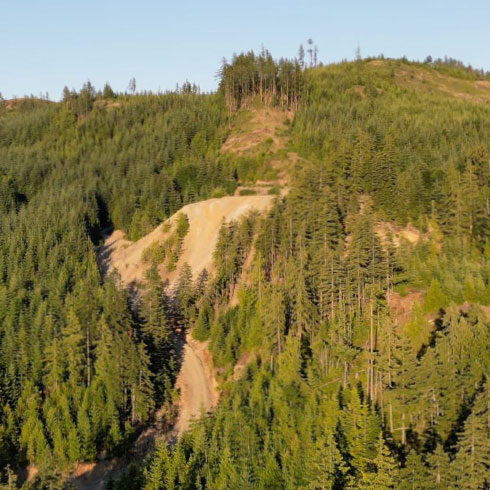
Sasquatch Resources is going after legacy waste rock at Mount Sicker on Vancouver Island, material that was mined, processed, and discarded as worthless more than a century ago. No drilling. No tailings pond. No new mine. CEO Peter Smith walks through how the project actually works, where the risks sit, and what the path to production looks like for something that doesn't fit any of the usual templates.
"Because the material is already above ground, we could be cash-flowing within a couple of months of starting operations."
— Peter Smith, CEO
The Setup
An interview with a CEO who is doing something different
Most junior mining stories in the articles we publish open with a drill bit, a discovery hole, and a ten-year horizon between sampling and anything that resembles revenue. The pitch is familiar: raise capital, drill, define a resource, raise more capital, permit, build, produce. Somewhere in that sequence, most projects stall.
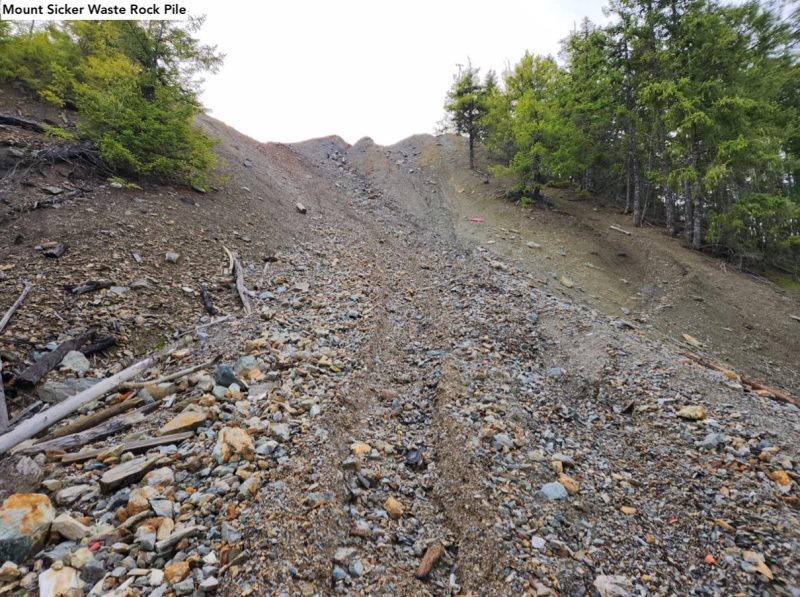
Sasquatch Resources is doing something different. The company is going after legacy waste rock at the abandoned Mount Sicker site on Vancouver Island, material that was mined, processed, and discarded as worthless more than a century ago, when the cutoff grades and recovery technology of the day left a great deal of value behind. That material has been sitting in piles at surface ever since, slowly oxidizing and leaching acid into the surrounding watershed. Sasquatch's plan is to crush it, sort out the high-grade sulphides, sell the concentrate, and leave the site in better shape than they found it. No drilling. No tailings pond. No new mine.
It's a model that bridges two categories the industry already knows how to talk about, and opens up a third. It isn't exploration, because the material is already on the surface and the historical records can tell you, in many cases, roughly what's in it. It isn't conventional production, because there's no orebody, no mill, and no decade of permitting ahead of it. It's closer in spirit to environmental remediation, except this version pays for itself, and the operator walks away with revenue rather than the public walking in with a cleanup bill.
If the model works, it points at a category of project that British Columbia, in particular, has a great deal of: an estimated 2,000 legacy mine sites, many of them generating ongoing environmental liability that someone, eventually, is going to have to address. The first operator to run the playbook end-to-end will be in a position to define how the rest of them get handled.
We sat down with CEO Peter Smith to walk through how the project actually works, where the risks sit, and what the path to production looks like for something that doesn't fit any of the usual templates.
Q.01 · The Model
How does the Mount Sicker "salvage" model differ from traditional mining projects currently on the market?
Peter Smith
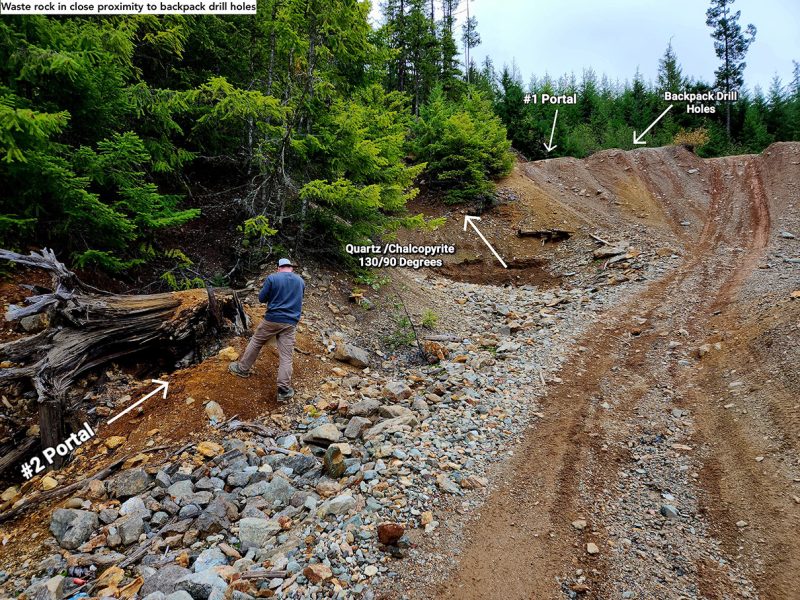
In a traditional mine, even with a discovery, you could be looking at a minimum of 10 years for drilling and permitting. We are targeting material that is already sitting in piles on the side of existing roads. Our capital costs are a fraction of a traditional operation—perhaps $2 million toward crushing, sorting and trucking to get going compared to tens of millions—because the material is already above ground and in piles.
"We also create no new waste — rather, we remove it. No tailings ponds, no new permanent infrastructure."
— Peter Smith
Q.02 · The Material
What is the scale of the material at Mount Sicker, and what are you extracting?
Peter Smith
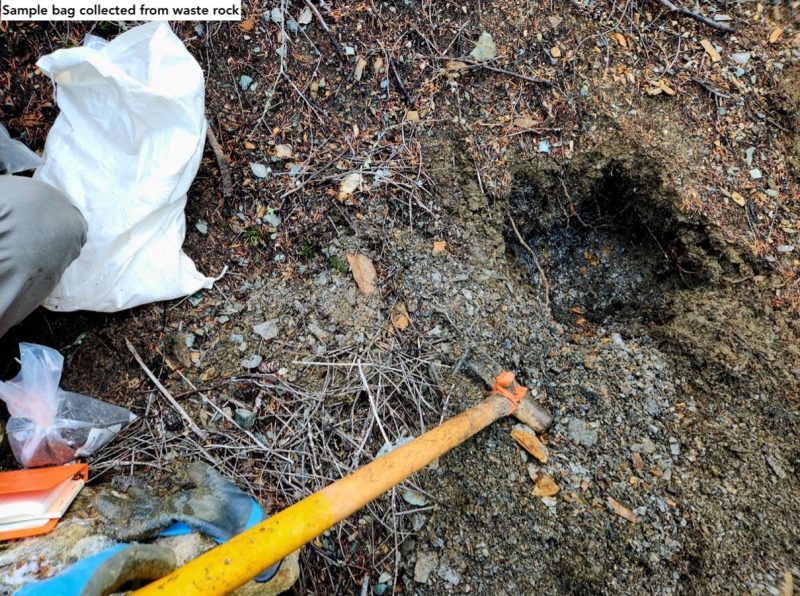
There are three main piles totaling approximately 300,000 tons of waste rock. Through our sorting process, we expect a mass pull of 30% to 40%, which, if that's accurate, turns that waste into roughly 100,000 tons of high-grade sulfides containing gold, silver, copper and zinc.
Grid Sampling Averages (surface)
Source: Sasquatch Resources grid-sampling program, Mount Sicker.
Q.03 · The Timeline
What is the anticipated timeline from the start of operations to cash flow?
Peter Smith
Once we start, we expect to be through the waste rock within one year. Because the material is already above ground, we could be cash-flowing within a couple of months of starting operations. The crushing and sorting process is actually quite fast and we can get through fairly large volumes of material quickly.
Perhaps best of all, reclamation runs simultaneously, so the land is also being rehabilitated (existing physical and environmental hazards are addressed) as we go.
Editor's note
Fast timeline, low capex, project wraps in a year. The obvious next question, where's the resource estimate, where are the project economics, has a less obvious answer.
Q.04 · The Economics
For investors looking at the bottom line, what are the projected Net Present Value (NPV) and Internal Rate of Return (IRR) for the Mount Sicker project at current gold and copper spot prices?
Peter Smith
In a more traditional exploration exercise, we'd be sampling and drilling an underground ore body and working toward defining a resource. Of course, you just never know where exactly ore bodies run under ground, nor whether they have consistent mineralization throughout. Our situation is slightly different. These are piles of material at surface, with corresponding mining records that suggest some degree of uniformity. Of course, we've sampled the surface of the pile on a grid, and taken the further step of digging into the piles (again, on a grid) to test the overall consistency further.
It could be argued that drilling repeatedly through the pile is not as necessary (and excessively expensive) given the scale of the project (less than a year of operations, and far less capital costs involved). We've seen good consistency with a great deal of sampling thus far — but of course the downside is that we can't specifically point to a resource. We are simply taking the added risk that our averages will hold throughout the pile, or that fluctuations will be of an acceptable range economically speaking.
Similar reasoning applies to producing a PEA. We could spend $500k plus producing one, but again, given the size, scope, and capital costs involved, we could possibly fund the start of operations for the same cash we'd outlay for a PEA. Again, the downside is that we are not able to discuss revenue projections in any meaningful way.
"We could possibly fund the start of operations for the same cash we'd outlay for a PEA."
— Peter Smith
However, in this case (Mount Sicker), we've decided at the board level that our degree of allowable error is fairly broad. We could run into unexpected material costs, and the price of metals could move down fairly dramatically, and we've internally decided the project still has reasonable economics. Again, this presents a fairly large risk factor for investors, as the project has not been externally vetted to the degree a new mine might be, but this is also a rather unique scenario in mining, as both the costs and duration of the project are at a fraction of what might otherwise be normal for a mining project.
Q.05 · The Permitting
How has the province adjusted its permitting process for an environmental cleanup project like this?
Peter Smith
They have allowed us to proceed under a Notice of Work (NOW) application rather than a full-blown mining permit. It is an abbreviated process, but still requires full engineering reports and field science.
"I believe the province should eventually create a specific permit category for processing waste rock at legacy sites, to provide more clarity for the industry."
— Peter Smith
Frankly, they've been great so far, as it's fairly new territory for everyone, but they certainly see the upside (for the public and the Province) in seeing legacy mine sites addressed.
Q.06 · The Hazards
Mount Sicker is known for being hazardous. What are the primary safety concerns you are addressing?
Peter Smith
It is a wasteland full of hazards, including open mine shafts up to 200 feet deep that are often hidden by brush.
"We want to make the site safe, potentially using platforms over these shafts to create a 'reclamation walk' for the community and geology students."
— Peter Smith
The waste itself is very high in sulphides and creates acid run off — by removing the sulphides (which contain gold, silver, copper and zinc, but also sulphur, arsenic and lead) we halt this issue which has been ongoing for over a century.
Q.07 · The Risk
How do you manage the risk of acid rock drainage when you begin disturbing these legacy piles?
Peter Smith
That is a major focus. When you disturb sealed piles, you risk increasing contaminants. We plan to operate primarily during the dry season and have protocols to seal off exposed sulfides if we encounter heavy rain. A core requirement of our permit is ensuring the 200,000 tons of rejects left behind are non-acid generating.
Editor's note
Acid rock drainage from legacy sites is one of the larger ongoing liabilities sitting on Crown land in BC. If nobody finds a way to make cleanup pay for itself, somebody else eventually pays, and "somebody else" usually ends up meaning the public.
528 kg sort test
What happens when the waste is sorted
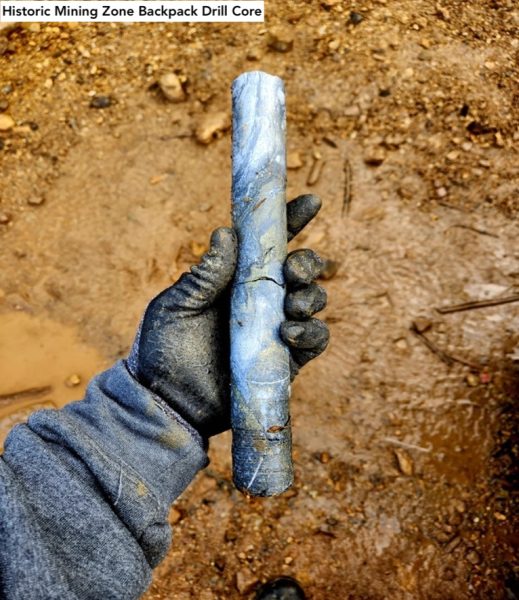
A 528 kg pilot sort test on Mount Sicker waste rock concentrated the metal values dramatically, while removing roughly 95% of the contaminants from the rejected material. These are the post-sort concentrate grades.
Gold
6.43 g/t
Silver
180 g/t
Copper
4.92%
Zinc
8.7%
Q.08 · The Team
You've recently added significant expertise to your board. Who is helping drive this strategy?
Peter Smith
We have Andy Holloway, a veteran metallurgist with 30+ years of experience who has dealt with the likes of Glencore and Ocean Partners — he's a true industry veteran that big players take seriously. I can't overstate how helpful he will be in both ensuring we create a salable concentrate and in finding suitable end buyers.
We also added Jillian Doucette as an advisor, a pure environmentalist who is helping us measure the carbon footprint of our copper versus traditionally extracted copper. She's very passionate about the environment, and would not normally work directly with "mining" companies unless she felt there was a clear net "benefit" potential for the land associated with the project.
Q.09 · The Pipeline
Does Sasquatch Resources have a formal strategy to secure rights to the other legacy sites in BC before competitors adopt this model?
Peter Smith
"Fortunately, there are some 2,000 legacy mine sites estimated in BC alone, so we won't need to look very far."
— Peter Smith
We've already got rights to Blue Grouse, about 35km away from Mount Sicker, and Santana, about 2 hours drive North. In addition, we've secured rights to a number of sections of logging road inadvertently built through high sulphide systems (one of these on Mount Sicker). In cases like this, there could be in the hundreds of thousands of waste used in road construction, with good grades for copper and the like, and also currently generating acid run off. Similar to our situation at Mount Sicker, this is waste sitting at surface that just needs to be crushed, sorted, and high sulphides removed.
I'll also note that we've been working on this for 3 years — I make it sound simple but there are a vast number of factors to consider, including (but not limited to) considerations of volume, access, metallurgy, and reclamation. If we can pull off this first "clean up" at Mount Sicker, we'll certainly be considered as among the foremost experts, and I firmly believe this will lead to a vast number of new opportunities (be it through the sale of prospects to us, JV, or even just as consultants).
Editor's note
Two thousand legacy sites is a number worth sitting with. Even a small fraction of that, addressed at this scale and pace, would represent a category of work the province has not historically had a way to get done.
Q.10 · The Offtake
What is the current status of offtake agreements? Are there binding agreements ready to trigger once the permit is issued?
Peter Smith
The permitting will come first, then I believe firm contracts will closely follow. We'll need to run detailed metallurgy work to ensure we match our end product with the best suited end processor, and we are able to provide as much information we can about processing prospects/methods — thus also ensuring the best possible price for the concentrate.
There has been interest, but it's all quite preliminary until we get farther along with permitting (which of course makes sense, as there is little point in conducting advanced negotiations before permitting is at least imminent).
A few notes for readers
What is worth watching
The Mount Sicker pitch sits outside the usual junior framework. There's no defined resource, no PEA, no signed offtake. Smith addresses all three directly in the interview above, and the reasoning he gives, that producing those documents would consume the capital that gets the project moving, is internally consistent at this scale. Readers can weigh that as they see fit.
What's worth watching is the model itself. BC has an estimated 2,000 legacy sites. Somebody is going to figure out how to address them at scale, and the first project to actually run end-to-end will shape how the province, the industry, and the communities living near these sites think about the category. Whether that first project is Mount Sicker, and whether Sasquatch is the operator who keeps doing this work or the proof-of-concept that bigger players build on, is a question with a much clearer answer a year from now.
A note on forward-looking statements
Statements attributed to Peter Smith in this interview reflect his stated views, expectations and plans as of the date of the conversation, and are not predictions, guarantees, or representations made by Canadian Mining & Energy. Operational timelines, mass-pull projections, expected grades, capital costs, and references to permitting outcomes are forward-looking by nature and remain subject to risks, uncertainties, and assumptions disclosed in Sasquatch Resources Corp.'s own continuous disclosure record. Potential quantities and grades referenced in this article are conceptual in nature; there has not been sufficient exploration to define a mineral resource on the Mount Sicker property. Readers should not place undue reliance on forward-looking statements and should consult the company's filings directly before making any investment decision.
Sasquatch Resources
Vancouver Island, BC
At a Glance
Company
Sasquatch Resources Corp.
Listing
CSE: SASQ
CEO
Peter Smith
Project
Mount Sicker
Location
Vancouver Island, BC
Stage
Pre-production (Notice of Work)
Model
Legacy waste-rock processing
In This Interview
Project Snapshot
Mount Sicker · grid sampling
Potential quantities and grades are conceptual in nature. There has not been sufficient exploration to define a mineral resource on the property.
Board & Advisors
Peter Smith
Director & CEO
Andy Holloway
Director
Justin Deveault
Director & VP
Thomas Lamb
Independent Director
Lou Webster
Independent Director
Nelson Lamb
Chief Financial Officer
Fred Bonner
Chief Geologist
Michael Raven
Corporate Secretary
Jillian Doucette
Board Advisor
Investor Resources