News

A Deeper Look at PAR’s Elikhulu Operation
·
A Deeper Look at PAR’s Elikhulu Operation

Executive Summary

Pan African Resources' Elikhulu tailings retreatment plant in Mpumalanga, South Africa, has established itself as a flagship operation that transforms historic mine waste into substantial economic value while delivering strong operational performance. In the 2025 financial year, the facility produced approximately 52,606 ounces of gold, representing nearly 26% of the group's total gold production of 196,527 ounces and marking a 5.6% increase in total group production year-over-year.

The operation demonstrates exceptional cost efficiency with an All-in Sustaining Cost of US$1,077 per ounce, positioning it as a low-cost, long-life asset within PAR's portfolio. Elikhulu processes approximately 1.2 million tonnes of historical tailings monthly using modern extraction technology that includes hydraulic mining, proprietary pre-oxidation processes, and Carbon-in-Leach technology. The plant's innovative design eliminates the need for regrind mills and thickeners while maintaining low reagent consumption and utilizing recycled water from adjacent operations.

Beyond its production metrics, Elikhulu serves a critical environmental function by reclaiming three existing tailings storage facilities (Kinross, Leslie, and Winkelhaak) and consolidating them into a single, modern facility. This process significantly reduces Evander Mines' environmental liability while creating substantial employment opportunities, with the operation directly employing 152 permanent staff and 214 contractors. The project's eight-year remaining life includes plans to begin processing the Winkelhaak TSF in FY2027, with sonic test drilling scheduled for FY2026 to update mineral reserve estimates.

The operation exemplifies responsible mining practices through its commitment to safety, community development, and environmental stewardship. PAR invested over US$6 million in social and community upliftment projects in the previous financial year while procuring over US$11 million from historically disadvantaged businesses. This integrated approach positions Elikhulu as a model for sustainable tailings retreatment operations that deliver both economic value and positive ESG outcomes in the South African mining sector.
🤖

AI-Generated Summary. This was written by a robot, not a human. It may contain errors, hallucinations, or confident-sounding nonsense. Always verify facts against the original source before making any decisions.

Read Original Source

Press Release

Derived from the Zulu word “Elikhulu,” meaning “The Big One” in English, the Elikhulu operation is Pan African Resources’ (PAR) flagship tailings retreatment plant. Situated in Mpumalanga, South Africa, the remining operation is renowned for transforming mine waste into substantial economic value.

It has had notable achievements to date over its lifespan, including its efficient gold recovery process in the form of tailings retreatment and rehabilitation, the significant contribution it has added to the company’s cash flow, and its pivotal role in demonstrating PAR’s ongoing commitment to sustainability and continuous operational improvement.

This article will explore the critical elements of the Elikhulu tailings retreatment plant in detail, underlining its broader Environmental, Social & Governance (ESG) impact and the integral role it plays within the PAR operational portfolio.

Table of Contents

How Operational Excellence Is Achieved & Maintained At Elikhulu

PAR prides itself on its commitment to operational excellence, a foundation of its success at the Elikhulu Tailings Retreatment Plant. This is achieved through a multi-faceted approach encompassing efficiency, safety, ingenuity, detailed planning, and engineering.

Elikhulu exemplifies this by transforming historic mine waste into valuable gold, showcasing economic viability and responsible mining. The following sections elaborate on the key pillars that ensure Elikhulu consistently maintains its high standards.

Production Overview and Achievements

Elikhulu has consistently demonstrated robust performance, adding significantly to PAR’s mining portfolio and gold output. In the 2025 financial year (FY2025), the plant produced approximately 52,606 ounces of gold, contributing almost 26% to the group’s total of 196,527 ounces of gold produced by all operations. This marked a 5.6% increase in total Group production for the financial year.

At the end of its life in approximately eight years, Elikhulu will successfully reclaim three existing tailings storage facilities (TSFs): Kinross, Leslie, and Winkelhaak. These processed tailings will be consolidated into a single, enlarged Kinross TSF, the footprint of which has already been established, effectively reducing Evander Mines’ environmental liability. The operation has consistently delivered on its production targets, yielding approximately 56,000 ounces of gold annually during the initial eight years from processing the Kinross and Leslie TSFs.

The operation continues to process approximately 1.2 million tonnes of historical tailings per month, demonstrating the large-scale throughput capacity of the retreatment plant.

Looking ahead, reclamation from the Winkelhaak TSF is expected to begin in FY2027, which will provide greater operational flexibility by allowing feed material from both Winkelhaak and the Leslie/Bracken facilities to be processed concurrently. As part of this development, sonic test drilling is scheduled to commence on the Winkelhaak TSF in FY2026 to update the Mineral Reserve estimate.

Elikhulu remains a low-cost, long-life operation within PAR’s portfolio. In FY2025, the project reported an All-in Sustaining Cost (AISC) of production of US$1,077 per ounce, highlighting its efficiency and its important role in supporting the Group’s overall cost profile and sustainable gold production.

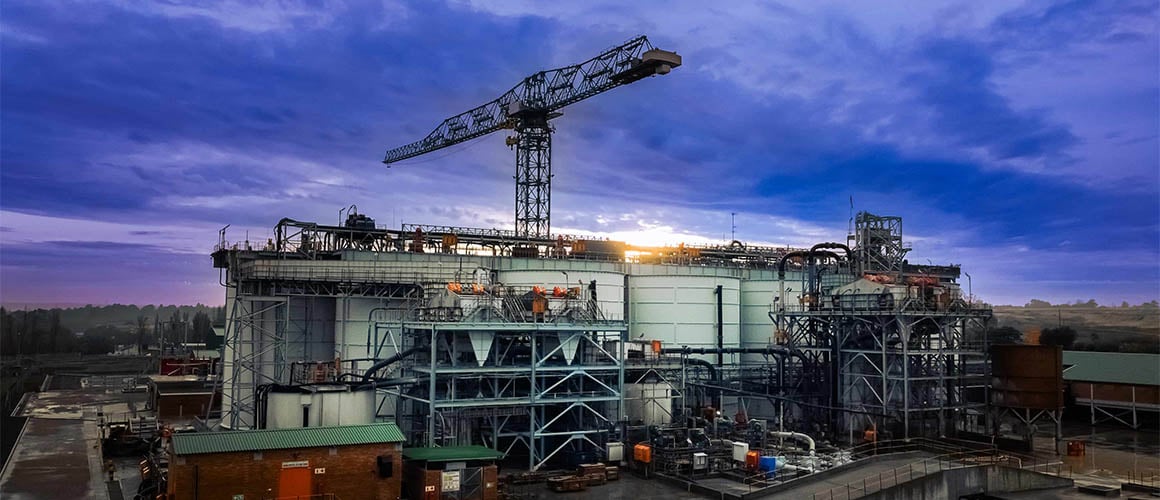
<img src="https://www.panafricanresources.com/wp-content/uploads/2026/03/drone-shot-of-elukhulu-mine-2.jpg "A Deeper Look at PAR's Elikhulu Operation 8"" alt="A wide shot of Elikhulu mine with several structures and a crane, with a dark blue cloudy sky in the background." />

Resource Utilisation: Maximising Ore Recovery

Elikhulu maximises ore recovery through its modern extraction process, which doesn’t require regrind mills and thickeners, and boasts low reagent consumption.

The first step in reclaiming the tailings material is done through hydraulic mining, a technique recognised for being cost-effective and less energy-intensive. Once reclaimed, the tailings are transformed into a slurry and pumped to the Elikhulu plant. This modern extraction process incorporates several innovations specifically designed to optimise gold recovery while minimising resource consumption, including through the use of recycled water.

Within the plant, after the proprietary pre-oxidation process, the gold is extracted using Carbon-in-Leach (CIL) technology, where gold is dissolved by a cyanide solution and adsorbed onto activated carbon. Following this extraction process, the remaining residues are re-deposited into a single, modern TSF.

This consolidation also significantly reduces the overall environmental footprint associated with the historical TSFs. Additionally, the plant also efficiently supplements its recirculated process water with non-potable recycled water from adjacent underground operations, demonstrating responsible water stewardship.

Workforce and Safety Standards: Practices & ESG Initiatives

As part of its operational excellence standards, the Elikhulu operation has generated significant employment opportunities by creating over 1,700 jobs during its construction phase. Since becoming operational in 2018, the plant has directly employed approximately 152 permanent employees and 214 contractors, most of whom are specifically skilled for this highly automated operation.

Additionally, PAR is committed to industry-leading safety standards and focuses on maintaining a zero-harm workplace through its beyond compliance approach. The company consistently implements ongoing safety awareness and training programs across its operations, ensuring a safe and healthy environment for all employees and contractors on-site.

Beyond direct employment, the operation also fostered local economic development by utilising more than 50 local and community-based businesses during construction. PAR continues to support new community businesses through its social ESG initiatives across all operations, including small business and enterprise development training. In the previous financial year, PAR invested over US$6 million in social and community upliftment projects and procured over US$11 million from businesses owned by historically disadvantaged persons, demonstrating their commitment across many community projects.

<img src="https://www.panafricanresources.com/wp-content/uploads/2026/03/smiling-man-in-yellow-vest-at-elikhulu-2.jpg "A Deeper Look at PAR's Elikhulu Operation 9"" alt="A smiling man wearing a white hard hat, glasses, and a yellow reflective vest is standing with crossed arms at Elikhulu mine." />

Technological Innovation at Elikhulu

Elikhulu has implemented several key technological innovations to improve operational efficiency, setting it apart from typical tailings treatment plants. While traditional plants focus on basic extraction, Elikhulu integrates advanced processing methods and makes use of automation, leading to increased gold recovery and a more positive environmental impact. This dedication to innovative engineering capabilities and detailed planning has paved the way for new standards in tailings retreatment.

Automated Plant Advantages: Increasing Processing Efficiency

The Elikhulu tailings facility is largely automated, which results in fewer people operating and handling the actual machinery. The employees hired to manage the TSF remining are highly skilled and make use of machinery operated by remote control. The machines they operate use high-pressure hydraulic units (water jets) to loosen and move the tailings material so it can be collected and processed safely.

This advanced technology not only streamlines processes but also vastly improves safety by reducing workers’ proximity to hazardous areas. The overall design also aims to minimise human intervention while maximising output.

<img src="https://www.panafricanresources.com/wp-content/uploads/2026/03/two-large-silver-drums-at-elikhulu-2.jpg "A Deeper Look at PAR's Elikhulu Operation 10"" alt="Two large silver industrial tanks or silos at Elikhulu, with a blue sky and white clouds in the background." />

Advanced Processing Techniques

Elikhulu employs cutting-edge metallurgical processes to enhance gold recovery from historical tailings. As stated previously, the advanced process begins with hydraulic mining, where high-pressure water jets loosen and slurry the tailings material from the dumps. The plant then incorporates a pre-oxidation step where high oxygen levels are used to facilitate mass transfers, another crucial step for improving gold extraction from complex ores.

Following this, it utilises Carbon-in-Leach (CIL) technology, a process where activated carbon is directly added to tanks where gold is dissolved by a cyanide solution. This allows the gold to be simultaneously leached and adsorbed onto the carbon and improves overall recovery rates. This innovative approach to tailings technology ensures efficient and effective gold extraction.

Environmental Leadership: Renewable Energy & Sustainability Initiatives

PAR has embraced a forward-thinking approach regarding the future of mining, placing a profound focus on sustainability not only in the operational sense but in the investment sense as well.

The group is accelerating its renewable energy plans with the target to install an additional 85MW of solar generation capacity across its operations over the next 24 months as part of its broader renewable energy strategy.

The following section outlines how the Elikhulu plant is not merely an operational site; it’s a testament to PAR’s commitment to long-term environmental stewardship, integrating renewable energy and robust sustainability practices.

<img src="https://www.panafricanresources.com/wp-content/uploads/2026/03/evander-solar-plant-landscape-2.jpg "A Deeper Look at PAR's Elikhulu Operation 11"" alt="Rows of solar panels at Evander are in the foreground with a large mine complex in the background." />

First Large-Scale Solar Implementation For Mining In South Africa

PAR achieved a significant milestone in the South African mining industry by becoming the first to implement large-scale solar energy in the country at Elikhulu. The 10MW Evander solar PV plant began supplying electricity to Elikhulu following its commissioning in May 2022 and is one of the first utility-scale solar PV installations in South Africa’s mining sector. The plant supplies 30% of Elikhulu’s annual power requirements, dramatically reducing reliance on the national grid and enhancing energy independence for the tailings facility.

It also led to annual cost savings of over $1.7 million and reduced greenhouse gas emissions by 26,000 tons of equivalent CO₂. The project also created up to 100 jobs during its construction phase, underscoring PAR’s leadership in sustainable mining practices, underpinned by ESG considerations at every step.

Water Recycling Initiatives

Elikhulu demonstrates strong environmental stewardship through its comprehensive water recycling initiatives. The plant implements closed-loop water management systems, significantly reducing its reliance on freshwater. It also supplements its recirculated process water with recycled non-potable water sourced from neighbouring underground operations, showcasing an efficient and responsible water supply strategy from existing resources. These innovations in wastewater reuse and treatment ensure that water consumption is minimised for such a large operation and preserve this vital resource.

<img src="https://www.panafricanresources.com/wp-content/uploads/2026/03/birds-eye-view-of-tailings-dam-2.jpg "A Deeper Look at PAR's Elikhulu Operation 12"" alt="A tailings retreatment dam at the Elikhulu plant." />

Evolution Of Tailings Management At Elikhulu

The management of gold tailings has evolved significantly over time, shifting from simple disposal to sophisticated reprocessing and responsible storage.

Elikhulu is a prime example of this evolution, demonstrating how modern mining can effectively address environmental legacies while creating economic value for shareholders. This section will highlight how the Elikhulu operation has provided a sustainable solution for vast volumes of mine waste.

Enhanced Innovations and Monitoring Systems In Tailing Storage Facilities (TSF)

Elikhulu exemplifies the latest advancements in TSF’s design and management. As stated previously, the plant consolidates three historical tailings facilities – Kinross, Leslie, and Winkelhaak – into a single, modern TSF that is meticulously lined with specific engineered material and consistently monitored, preventing environmental contamination.

Elikhulu incorporates modern engineering practices in the design and management of its TSFs. The project processes historical tailings from the Kinross, Leslie and Winkelhaak facilities, with processed material deposited into an expanded Kinross TSF that has been engineered to support long-term stability and responsible tailings management.

Elikhulu’s commitment to TSF safety and stability goes beyond legal requirements, aligning with and implementing industry-leading monitoring systems. Daily procedures include operator diaries, interactive feedback meetings, and site inspections, with drone surveys and monitoring of the facility on a weekly basis.

Monthly reports cover water management and environmental aspects, alongside more formal meetings involving mining operations and TSF operators. Quarterly meetings are held between general mine operators, tailings-specific operators, and the Engineer of Record (EoR), culminating in formal compliance reports and Department of Mineral and Petroleum Resources (DMPR) inspections. This collaborative approach with regulatory bodies ensures ongoing compliance and the highest safety standards.

<img src="https://www.panafricanresources.com/wp-content/uploads/2026/03/female-mine-worker-at-elikhulu-2.jpg "A Deeper Look at PAR's Elikhulu Operation 13"" alt="A mine worker in PPE holding a tube up in the air." />

Sustainable Tailings Reprocessing

Elikhulu is at the forefront of sustainable tailings reprocessing, demonstrating significant economic and environmental benefits. By extracting residual minerals, primarily gold, from old tailings, the plant effectively reclaims valuable resources that were previously considered waste.

This advanced management and strategic approach not only generates significant revenue but also contributes to the rehabilitation of historical mining land and environmental footprints. Integrating these reprocessed materials into the supply chain showcases a circular economy model within the mining sector, something that PAR pioneers in mining for the future.

Operational Resilience: Managing Key Challenges

The Elikhulu tailings retreatment plant, while being a beacon of innovation, has faced its share of operational challenges inherent to the South African mining landscape.

PAR has demonstrated strong operational resilience by navigating these obstacles through proactive strategies, robust planning and advanced management, ensuring the continued success of this critical plant and its portfolio of operations.

Strategies For Adapting To Weather & Climate Conditions

Mining operations in South Africa have faced increasing challenges due to climate change, marked by erratic rainfall patterns, prolonged droughts, and unexpected flooding, which can significantly impact mining structures, on-site safety, and rates of operation and output.

In response to these growing climate pressures, Elikhulu has implemented strategies to face these unpredictable weather conditions confidently. For instance, after recognising the risks posed by the lack of water availability during drought periods, Elikhulu constructed a 6 km pipeline and commissioned the Leslie/Bracken pump station in 2022, significantly improving water supply reliability during these seasons.

The facility is also designed to withstand Probable Maximum Flood (PMF) levels by incorporating spillways and diversion channels to safely reroute intense rainfall. Careful structural integrity checks are also conducted by the Engineer of Record (EoR). The dam is scrutinised for signs of stress, erosion, or seepage, especially following major weather events. Their HMS (Hazard Management System) also captures and reports on data accounting for drain flows, phreatic levels and pool depth.

These strategic investments, alongside the mine’s use of non-potable water and underground water recycling initiatives, underscore its commitment to safeguarding operations against climate-induced water challenges.

Power Supply Solutions: Reliable Renewable Energy Solutions & Reducing Environmental Impact

South Africa has faced persistent challenges with an unstable electricity supply, primarily due to load shedding and power interruptions from the national grid. These disruptions significantly impact industrial operations such as mining, leading to reduced productivity and increased operational costs through above-inflation annual cost increases.

In response to these critical challenges, PAR has implemented strategic power supply solutions at many of its mines, including Elikhulu. This approach includes the integration of renewable energy sources in the form of their 10MW solar plant, further facilitating reduced scope 1 greenhouse gas (GHG) emissions, significant cost savings and job creation.

The South African government recently announced an increase in the electricity generation cap for private consumers, from 1MW to 100 MW. Seizing this opportunity, PAR has completed feasibility studies to expand its renewable energy capacity in the coming years and expects over 60% of its energy requirements from renewable energy sources by 2030, including through solar, wind, and battery storage facilities.

Production Consistency Despite Obstacles

Elikhulu has maintained remarkable production consistency despite various obstacles, including power supply instabilities and heavy rains. This is mainly attributed to comprehensive contingency planning for potential disruptions.

An example to showcase this is in the 2022 financial year, Elikhulu produced 52,220 ounces of gold, in 2023, it produced 50,573 ounces, in 2024, it produced 54,812 ounces, and in 2025, it produced approximately 51,000 ounces. For the first half of the 2026 financial year, PAR’s Elikhulu Tailings Retreatment Plant produced 29,450 ounces of gold.

The plant consistently processes 1.2 million tonnes of historical tailings monthly, demonstrating its operational efficiency.

While specific employee training for adaptability and crisis management protocols for unforeseen events are part of PAR’s broader operational framework, Elikhulu’s consistent output demonstrates the effectiveness of these measures in ensuring continuous operation.

Future Developments and Strategic Priorities

As Elikhulu continues into the year ahead, PAR has outlined clear strategic goals to enhance the tailings retreatment plant’s performance and sustainability. These priorities focus on crucial infrastructure upgrades, facility enhancements, and continued commitment to environmental stewardship, setting the stage for increased projected output and continued focus for the PAR executive team.

Development of the Winkelhaak Tailings Feed Infrastructure

A key operational priority for Elikhulu is the development of new remining infrastructure at the Winkelhaak TSF. Construction of this infrastructure is currently in progress and will enable the plant to access additional tailings resources as part of its long-term feed strategy.

According to the latest operational update, Winkelhaak tailings are expected to begin supplying process feed from FY2027, initially blended with material from the Leslie/Bracken tailings facilities. This development will improve operational flexibility while supporting consistent throughput at the Elikhulu plant.

Renewable Energy Expansion

PAR continues to expand its renewable energy initiatives to reduce electricity costs and improve sustainability across its operations. At the Evander mine, the 9.9MW solar photovoltaic plant already provides approximately 30% of Elikhulu’s energy requirements.

Plans are underway to expand this renewable energy capacity by approximately 20MW, with construction expected to commence in FY2026 and commissioning targeted for FY2027. This expansion will further reduce reliance on grid electricity while strengthening the operation’s cost competitiveness and environmental performance.

<img src="https://www.panafricanresources.com/wp-content/uploads/2026/03/smiling-woman-in-green-jumpsuit-at-elikhulu-2.jpg "A Deeper Look at PAR's Elikhulu Operation 14"" alt="A smiling mine worker in green PPE and rows of tubes in the background." />

Water Treatment and Process Infrastructure Improvements

PAR is also investing in water management infrastructure at Evander Mines, which supports the Elikhulu operation. A major upgrade to the site’s water treatment facility is currently underway, increasing treatment capacity from 3 megalitres per day to 6 megalitres per day.

This expanded capacity will reduce reliance on municipal water supplies while improving water recycling efficiency across the operation, supporting both operational resilience and responsible resource management. This also improves the local municipality’s capacity to supply the growing needs of adjacent communities, which have experienced water disruptions due to inadequate supply.

Infrastructure Reliability and Operational Efficiency

Maintaining the reliability and efficiency of the Elikhulu plant remains a strategic priority for PAR. Ongoing investments in infrastructure, processing equipment, and operational systems help ensure the plant continues to operate at its consistent throughput rate of approximately 1.2 million tonnes of tailings per month.

These investments support long-term production stability, allowing Elikhulu to maintain its strong performance as a high-volume, low-cost tailings retreatment operation within the PAR Group’s portfolio.

Sustainability Initiatives

Sustainability remains central to PAR’s operational strategy. Elikhulu contributes to this goal through its renewable energy integration, improved water management systems, and responsible tailings retreatment practices.

Across the Group, renewable energy initiatives are expected to increase the proportion of energy generated from renewable sources to approximately 60% by FY2028, forming part of the company’s broader decarbonisation strategy. These initiatives demonstrate PAR’s commitment to responsible mining and long-term environmental stewardship.

Final Thoughts on Elikhulu Tailings Retreatment Plant

As PAR’s flagship tailings operation, the Elikhulu tailings retreatment plant is a remarkable example of mining excellence in South Africa. From its strategic design as a low-cost, high-volume operation to its consistent gold production, Elikhulu has significantly contributed to the Group’s financial strength and operational diversification. Its ability to extract value from what was once considered waste underpins its success.

Beyond its economic accomplishments, Elikhulu is pivotal in driving sustainability and innovation within the mining sector. Its state-of-the-art processing techniques, advanced management, significant investment in solar energy, and expanded water recycling initiatives demonstrate the company’s commitment to environmental stewardship. The continuous evolution of its tailings management and improvement through reporting and monitoring systems showcases a dedication to responsible mining practices.

Looking ahead, the Elikhulu tailings retreatment plant continues to be a cornerstone of PAR’s long-term goals. With ongoing investments in infrastructure, planned cyanide facility upgrades, and the completion of TSF extensions, Elikhulu is poised to maintain its position as a leading, low-cost gold producer. Its success has been used as a blueprint for the newly established Mogale Tailings Retreatment operation, coined “Elikhulu 2.0”, highlighting the company’s vision for sustainable growth and a positive impact on both its portfolio and the communities it serves.

As a leading producer of sustainable gold, PAR shares insights into its operations, growth projects, and sustainability initiatives through the Pan African Resources Blog and Horizons Newsroom. Explore their updates on the Mogale Tailings Retreatment operation, a major development built on the success of Elikhulu, and recent editorials covering the company’s broader approach to sustainable mining, community engagement, and employee investment.

The post A Deeper Look at PAR’s Elikhulu Operation appeared first on Pan African Resources.

Aggregated Content

This article was imported from an RSS feed. Content and accuracy are the responsibility of the original publisher.