Ontario’s Three Renewable Energy Powerhouses Shaping Canada’s Clean Future
Executive Summary
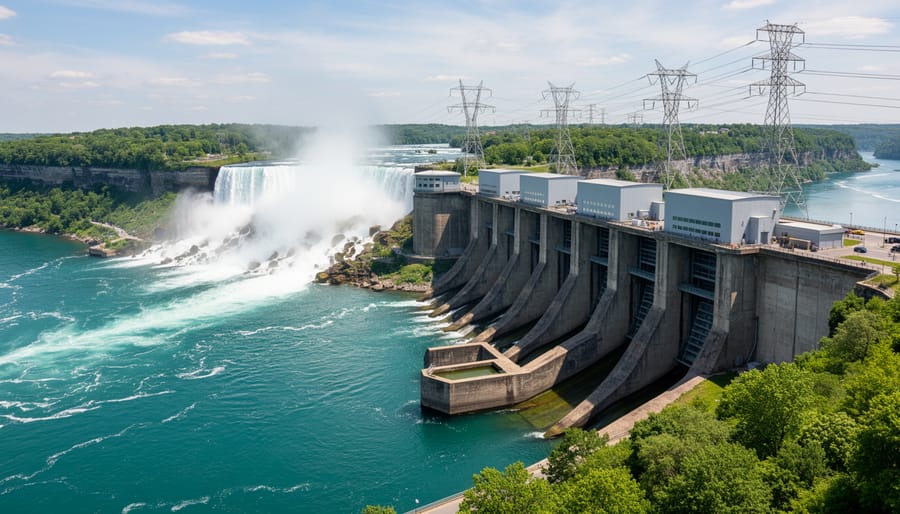
The province's energy infrastructure demonstrates the critical interconnection between Ontario's resource economy and its clean energy transition. Hydroelectric facilities ranging from the massive Sir Adam Beck stations at Niagara Falls to smaller run-of-river systems across the Canadian Shield provide consistent renewable generation. Nuclear power delivers approximately 12,000 megawatts of carbon-free baseload electricity, utilizing Canadian uranium while incorporating nickel components from Sudbury mining districts in reactor systems and future battery storage applications.
Indigenous communities are increasingly moving from consultation to ownership in energy projects, with partnerships like Moose Cree First Nation's involvement in the Lower Mattagami hydroelectric project representing a shift toward equitable benefit-sharing and decision-making authority. These collaborations recognize traditional knowledge about watershed management while creating sustainable employment and economic self-determination opportunities in remote communities.
The province's successful transition away from coal, completed in 2014, proves that large-scale energy transformation is achievable when technology, policy, and community interests align. Nuclear power plays a particularly crucial role by providing the stable foundation that enables higher renewable energy penetration, addressing the intermittency challenges of wind and solar generation while maintaining grid reliability during peak demand periods and seasonal variations.
AI-Generated Summary. This was written by a robot, not a human. It may contain errors, hallucinations, or confident-sounding nonsense. Always verify facts against the original source before making any decisions.
Full Press Release
Read the full
release here.
We've given you the AI-distilled summary above. For the full announcement, source data, and direct quotes, go straight to the publisher.
Aggregated Content
This article was imported from an RSS feed. Content and accuracy are the responsibility of the original publisher.
Company Mentioned

Related Stories
Manganese X Energy to Present at the June 16 Energy & Precious Metals Virtual Investor Summit
2 hours ago
Radisson Announces Results of its Annual and Special Meeting of Shareholders
7 hours ago
The Supreme Court of BC dismissed the petition challenging Record Ridge
11 hours ago
West High Yield (W.H.Y.) Resources Ltd. announces court dismisses judicial review challenging Record Ridge Project
11 hours ago

RIO2 VIRTUAL AGM REMINDER
12 hours ago