Discover by Category
First Nations.
In Canada, mines and potential mines often lie in or close to the traditional lands of First Nations people. When a mine is being considered or developed in such an area, important negotiations with First Nations are part of the process to...
55 stories
Kaminak announces new, Northern access road route to Coffee Project endorsed by First Nation
Kaminak Gold has selected a northern access route from Dawson City to its Coffee gold project in Yukon, requiring only 30 km of new construction out of 190 km total. The route has received strong support from the Tr'ondëk Hwëch'in First Nation and is expected to cost less than the previously estimated $35 million southern route.
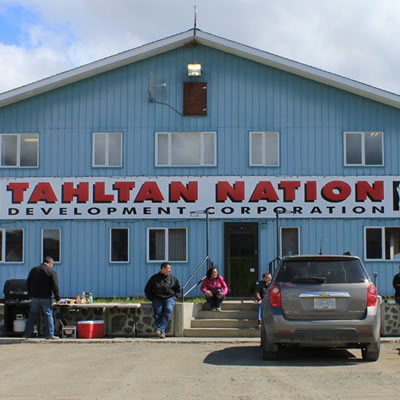
TNDC and the Tahltan Nation invest in Imperial Metals
The Tahltan Nation Development Corporation has invested in Imperial Metals Corporation through convertible debenture financing to support the Red Chris mine operations. This investment strengthens the partnership between the Indigenous nation and the mining company, with Red Chris employing approximately 40% Tahltan workers and providing additional contract opportunities. The move advances TNDC's strategic plans to diversify revenue streams while reinforcing their co-management agreement.
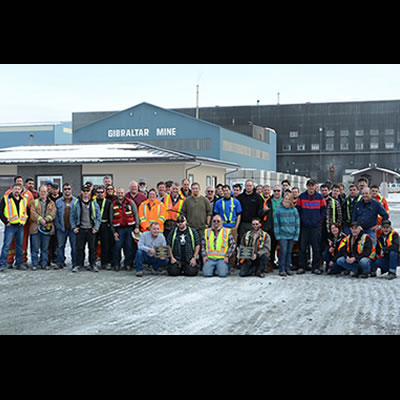
Taseko and Soda Creek Indian Band Sign participation and cooperation agreement
Taseko Mines Limited has signed a Participation and Cooperation Agreement with the Soda Creek Indian Band (Xat'sull) for the Gibraltar Mine operations in British Columbia. The agreement establishes a framework for collaboration on environmental and economic issues, with Chief Donna Dixon noting it provides capacity for direct engagement and supports community development initiatives.
Saturn Minerals’ unique approach to partnering with First Nations
Saturn Minerals CEO Stan Szary pioneered an innovative partnership approach with Saskatchewan First Nations, forming the jointly-owned Inowending Exploration and Development Corporation in 2011. The company contrasts this collaborative model with traditional patronage approaches, emphasizing shared ownership and decision-making in coal and oil exploration projects near the Saskatchewan-Manitoba border.
Sabina Gold & Silver and Kitikmeot Inuit Association announce new agreements
Sabina Gold & Silver and the Kitikmeot Inuit Association signed two new agreements for the Back River Gold Project in Nunavut. The agreements establish a Development Trust Fund receiving 3% of Sabina's silver royalty proceeds and a Capacity Funding Agreement to support environmental permitting over three years through 2016.
Steering Baffinland’s Mary River Project
Tom Paddon, CEO of Baffinland Iron Mines Corporation, discusses the development of the Mary River Project on North Baffin Island, Nunavut. The project contains 365 million tonnes of high-grade iron ore (over 65% Fe) and is scheduled to begin mining operations later in the year with first ore shipments in 2015. Paddon emphasizes the importance of stakeholder engagement with Indigenous communities and building strong workplace culture at the remote Arctic operation.
First Nations sought as equity partners
The federal government and First Nations Financial Management Board are launching an initiative to help First Nations become equity partners in major resource projects in British Columbia. The First Nations Finance Authority will offer long-term loans at 4.1% rates to enable First Nations to invest in natural resource projects, backed by federal guarantees and capital market access.
Executive confident about gold mine’s development
Pretium Resources CEO Robert Quartermain expressed confidence that the company's high-grade Brucejack gold project in northwestern BC will proceed to production by 2016, despite uncertain gold prices. The project contains 8.7 million oz. of measured and indicated gold at 17.6 g/t in the Valley of the Kings zone, with an updated feasibility study expected in Q2 2014.
Bringing reliable power to northern BC
BC Hydro is constructing a 287-kilovolt Northwest Transmission Line from Terrace to Bob Quinn substation, expected to complete in May 2014. The project will supply clean power to major mining operations including Imperial Metals' Red Chris Mine and connect the diesel-dependent community of Iskut to the grid. AltaGas is developing three run-of-river hydroelectric projects totaling 277 megawatts to supply power to the transmission line.
How G8 transparency rules affect Canadian mining companies
Legal expert Alan Hutchison discusses G8 transparency rules requiring mining companies to disclose government payments, noting the regulations should help rather than hinder the industry. He emphasizes that community relations and First Nations accommodation agreements are increasingly critical for project approval in Canada.
Yellowknife’s Mine Training Society gets $5.8 million in funding
The Mine Training Society in the Northwest Territories received $5.8 million in federal funding for its Mining the Future initiative, announced by Prime Minister Stephen Harper. The program aims to train aboriginal populations for upcoming mining opportunities, with projections of 14,000 employment opportunities by 2017 as new mines develop and existing diamond mines enter reclamation phases.
New president of Geoscience BC brings years of experience to the table
Robin Archdekin was appointed as the new president and CEO of Geoscience BC, effective October 1, 2013. He brings extensive experience across the resource sector and emphasizes the importance of collaboration with First Nations and government stakeholders. Geoscience BC is launching the TREK Project, a major regional minerals initiative covering over 25,000 square kilometres of BC's northern interior plateau.
Ring of Fire Aboriginal Training Alliance receives $5.9 million
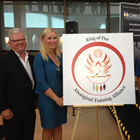
The Ring of Fire Aboriginal Training Alliance (RoFATA) received $5.9 million from the Government of Canada's Skills and Partnership Fund to provide mining sector training for Matawa First Nations members. The program will train approximately 260 people with 196 expected to enter employment, supporting Noront Resources' Eagle's Nest nickel-copper-platinum-palladium project in the Ring of Fire.
Benefits for industry and communities
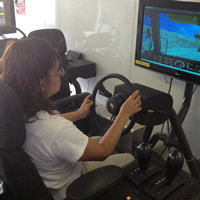
The BC AMTA has successfully placed 561 Aboriginal individuals in mining positions across British Columbia as of July 2013, with eight more candidates graduating from their heavy-equipment operators program. The non-profit organization provides comprehensive training and support to address labour shortages while creating economic opportunities for First Nations communities near mine sites.
BC AMTA receives $13,000 donation from Microsoft
The British Columbia Aboriginal Mine Training Association (BC AMTA) received a $13,000 software donation from Microsoft through TechSoup, providing 30 copies of MS Office Professional for their Williams Lake and New Aiyansh computer labs. This donation will enhance training for Indigenous candidates entering the mining and exploration industry, with graduates seeing average wages increase from $13,754 to $52,959 per year.
Yukon College celebrates 50 years
Yukon College celebrates its 50th anniversary while highlighting the success of its Centre for Northern Innovation in Mining (CNIM), established in 2012. The centre's first Introduction to Mining Operations program achieved remarkable success with 11 of 12 graduates finding employment, demonstrating strong industry demand for locally-trained mining professionals.
The inaugural BC Mining HR Diversity Award
The BC Mining HR Task Force and Mining Association of BC launched the inaugural BC Mining HR Diversity Award in 2013, recognizing BC AMTA and New Gold for their partnership creating employment opportunities for Indigenous communities. The initiative achieved a 65% unemployment-to-employment transition rate and 93% retention rate, with 24% of New Afton's workforce self-identified as Indigenous.
Operating with respect for the land
Duz Cho Construction, owned by the McLeod Lake Indian Band, has completed extensive infrastructure and tailings facility construction at the Mount Milligan mine site northwest of Prince George over three years. The company built road access infrastructure and an 8-kilometre earthen dam structure for the tailings storage facility, with the mine scheduled to open in July 2013.
BC AMTA celebrates two major milestones
The British Columbia Aboriginal Mine Training Association celebrated major milestones with 55 First Nations students graduating from mining workforce programs in Williams Lake and Merritt in early 2013. The organization secured $10 million in federal funding and expanded operations to multiple offices across BC after previously shutting down in 2012.
How B.C. can win a gold medal in the economic Olympics
Mining executives at the BC Natural Resource Forum called for streamlined permitting processes and improved First Nations consultation frameworks to boost mining investment in British Columbia. The panel highlighted regulatory inefficiencies as barriers to development, with companies like Xstrata Coal investing $700 million in northeastern BC coal projects.
Yukon Zinc receives a second Robert E. Leckie Award
Yukon Zinc Corporation won its second consecutive Robert E. Leckie Award for responsible mining practices at the 40th Annual Geoscience Forum. The company's Wolverine zinc-silver mine reached commercial production at 1,020 tonnes per day (60% of designed capacity) in March 2012 and is ramping up to over 80% capacity by year-end. The company plans to reach full production in early 2013 while focusing on water treatment innovations and First Nations employment programs.
Orca Quarry: pursuing a rock-solid business plan
Polaris Minerals Corporation operates the Orca Quarry on Vancouver Island, potentially Canada's largest sand-and-gravel quarry, which has survived the economic downturn despite demand dropping 45-50% since opening in 2007. The company reported 1.5 million tonnes sold in the first nine months of 2012, up 36% from the previous year, with 90% of production exported to California markets.
Consultation before action is critical
Indigenous relations expert Bob Joseph warns that many mining companies still fail to understand the critical importance of consultation with First Nations before seeking government permits. Companies that engage First Nations early and secure agreements before applying for permits achieve better outcomes and economic certainty.
The BC AMTA will continue to provide valuable services
The BC AMTA, which had to close in 2012 due to funding issues, is set to resume operations with a new three-year government agreement. The organization has successfully placed 335 First Nations people in full-time mining jobs and plans to expand into two new regions in British Columbia.