Discover by Category
Energy.
203 stories
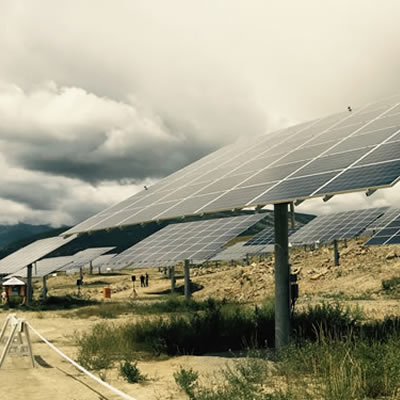
SunMine wins National Engineering Project Award
Kimberley's SunMine solar facility won the National Award for an Engineering Project or Achievement from Engineers Canada. The project is BC's first grid-connected solar facility built on a reclaimed mine site, featuring 4,032 solar modules on 96 sun-tracking systems that generate 40% more energy than fixed installations.
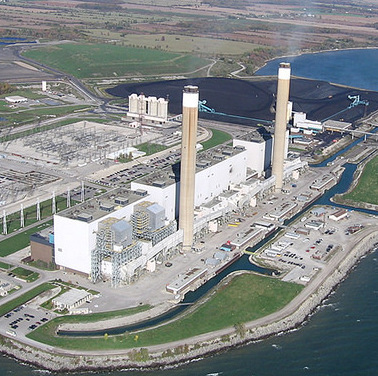
Ontario to convert largest coal plant in North America to solar farm
Ontario Power Generation is converting the former Nanticoke coal plant, once North America's largest coal-fired facility, into a 44-megawatt solar farm. Construction is expected to begin in late 2017 with completion in 2019, marking a significant transformation from one of Canada's worst polluters to clean energy generation.
Taking the politics out of pipeline reviews: Straight talk with Gaetan Caron
Former National Energy Board Chair Gaétan Caron argues that Canada's environmental assessment process is working well but has become overly politicized. He recommends reforms to restore public confidence in pipeline reviews, including better public engagement mechanisms and clearer role definitions for regulatory bodies.
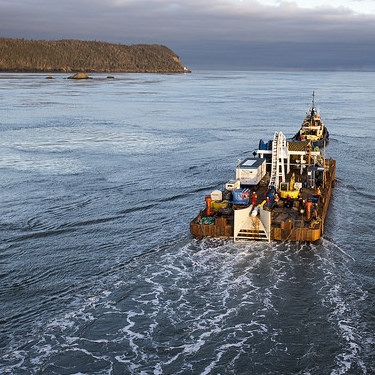
Nova Scotia facility could make Canada a global leader in tidal energy
The Fundy Ocean Research Center for Energy (FORCE) in Nova Scotia is developing Canada's tidal energy capabilities on the Bay of Fundy, with infrastructure supporting up to 64 megawatts capacity. The facility could position Canada as a global leader in tidal energy, with the California-based Electric Power Research Institute estimating potential of almost 300 megawatts in the Minas Passage alone.
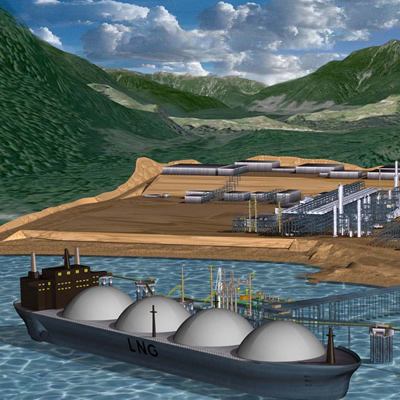
LNG export terminals vital for B.C. gas producers
The Canadian Association of Petroleum Producers argues that West Coast LNG export terminals are critical for B.C.'s struggling natural gas industry, as unemployment in northeastern B.C. has reached 9.2% due to declining North American demand. Federal approval of the Woodfibre LNG project represents a key step toward accessing growing Asian markets and potentially creating 65,000 jobs nationally.
Alberta accepts recommendations to strengthen scientific oversight of environmental monitoring
Alberta is restructuring its environmental monitoring system by replacing the Alberta Environmental Monitoring, Evaluation and Reporting Agency (AEMERA) with a new government-led division under a Chief Scientist. The new structure will include independent science advisory and traditional ecological knowledge panels to strengthen oversight of environmental impacts from industry and resource development.
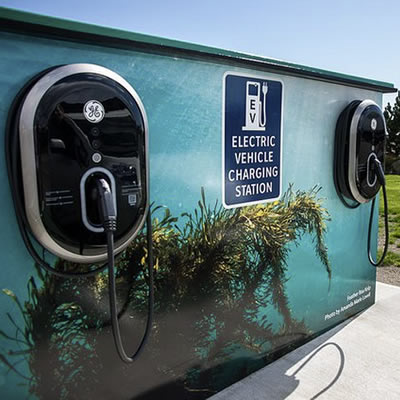
Government charging up electric vehicles
The Province of British Columbia announced $965,000 in funding to expand electric vehicle charging infrastructure, including $688,500 for residential building chargers and $276,500 to upgrade public fast charging stations. The investment is part of the broader Clean Energy Vehicle Program which has committed over $31 million since 2011 to encourage EV adoption and reduce greenhouse gas emissions.
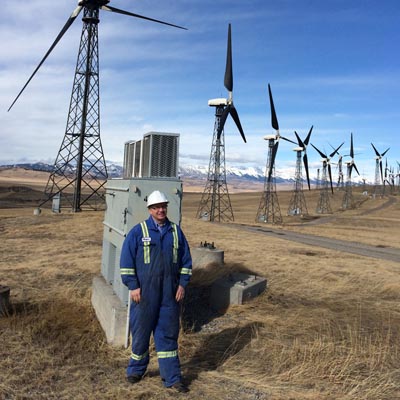
TransAlta to power down Cowley Ridge—first and oldest commercial wind facility in Canada
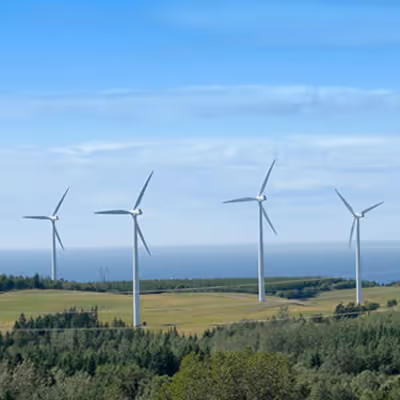
TransAlta is decommissioning Canada's first and oldest commercial wind facility, Cowley Ridge in Alberta, which has operated since 1993 and reached the end of its 20-year design life. The 16-megawatt facility with 57 turbines will be dismantled with over one million pounds of metal recycled, and the company is considering repowering the site as part of Alberta's clean energy transition.
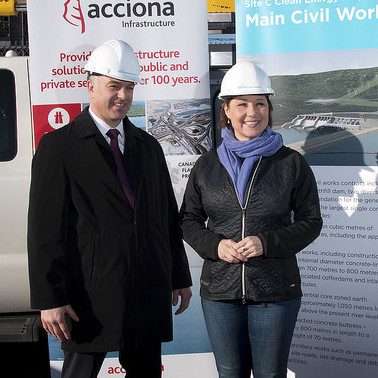
Site C’s main civil works contract will create thousands of jobs
BC Hydro awarded the main civil works contract for the Site C hydroelectric project to Peace River Hydro Partners, creating 1,500 jobs at peak construction. The contract includes building an earthfill dam, diversion tunnels, and concrete foundations, with construction expected to contribute $3.2 billion to the provincial economy.
The Eastern Alberta Transmission Line (EATL) was energized in December 2015
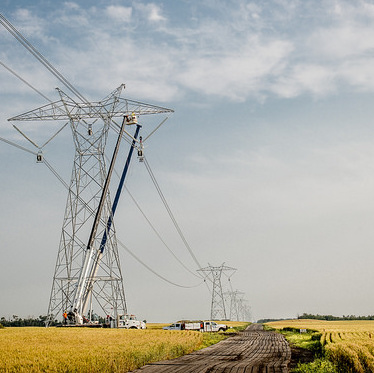
The Eastern Alberta Transmission Line (EATL), Alberta's longest transmission line at 485 kilometers, was energized in December 2015, connecting Brooks in the southeast to the Gibbons-Redwater area northeast of Edmonton. Valard completed all construction phases including the assembly and erection of 1,387 steel lattice towers using innovative safety procedures. The transmission line reduces electricity losses and supports Alberta's renewable energy infrastructure by facilitating the movement of wind and solar power.
TransCanada commences legal actions following Keystone XL denial
TransCanada filed legal challenges under NAFTA and in U.S. federal court following the denial of the Keystone XL Pipeline permit, seeking over US$15 billion in damages. The company expects a $2.5-2.9 billion after-tax write-down in Q4 results due to the permit denial but maintains its dividend growth guidance.
GFS Corp names Wajax and Cullen Diesel Power as new Canadian Distributors
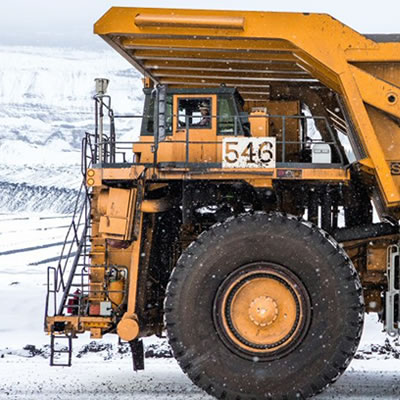
GFS Corp has appointed Wajax and Cullen Diesel Power as Canadian distributors for its EVO-MT natural gas conversion systems for mining haul trucks. The announcement comes as Teck Resources begins a pilot program testing LNG fuel in Komatsu haul trucks at its Fording River coal operation, with approximately 300,000 operating hours already accumulated across converted fleets.
New securities regulations will make it easier for mining juniors to raise money
The Canadian Securities Administrators announced regulatory changes allowing publicly listed companies to conduct rights offerings without issuing a new prospectus, significantly streamlining the capital raising process. The amendments also raise the share dilution cap from 25% to 100%, enabling companies to raise substantially more capital through this mechanism.
Our Top 10 mining and energy stories from 2015
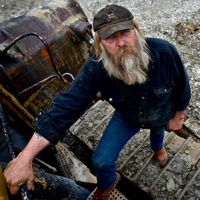
Canadian Mining & Energy published its top 10 most popular articles from 2015, featuring profiles of industry personalities like Gold Rush star Tony Beets, coverage of hydro infrastructure, forestry-based clean electricity, and mining reclamation projects. The retrospective highlights the diverse range of stories that resonated with readers in the mining and energy sectors.
World’s cleanest LNG legislation in force Jan 1, 2016
British Columbia's new Greenhouse Gas Industrial Reporting and Control Act (GGIRCA) came into force January 1, 2016, establishing emissions caps for LNG facilities to make them the cleanest in the world. The legislation sets a $25 per tonne price for emissions that exceed benchmarks, with revenue supporting clean technology development.
Keystone XL permit denial compromises environment, economy, jobs and public safety
TransCanada Corporation's CEO Russ Girling condemned President Obama's denial of the Keystone XL pipeline permit, calling it a decision based on symbolism over science. The company argued the US$8 billion project would have created 42,000 jobs and provided safer oil transportation than rail alternatives. TransCanada is reviewing the decision and its rationale while maintaining the project is in both countries' best interests.
Nelson’s innovative Community Solar Garden set to shine
Nelson Hydro announced Canada's first community solar project where customers can purchase solar panels and receive credits on their electricity bills. The 50kW+ solar array will be located at the Bonnington Generation Station and requires presale of 150 panels to proceed in Spring 2016.
Top 10 hydroelectric dams in Canada
Canada ranks as the world's third-largest hydropower producer with over 82,000 MW of installed capacity across 600 stations, generating 60% of the country's electricity from hydroelectric sources. Major recent developments include BC's $16-billion Site C dam reaching full operation in 2025 and the landmark Churchill Falls contract renegotiation between Quebec and Newfoundland and Labrador.
Suncor Energy launches $6.6 billion bid to takeover Canadian Oil Sands Limited
Suncor Energy launched an unsolicited $6.6 billion takeover bid for Canadian Oil Sands Limited, offering 0.25 Suncor shares for each COS share at a 43% premium to market price. The deal would create Canada's leading integrated oil sands company with enhanced dividend prospects and operational scale.
Top Ten Wind Energy Producing Provinces in Canada
Canada's wind energy capacity stands at 10,204 MW with Ontario leading at 3,927 MW (38%). British Columbia ranks fourth with only 489 MW despite having world-class wind resources, with $10 billion in projects awaiting BC Hydro purchase agreements.
The $9-billion Kearl Oilsands mine: An overview
Imperial Oil announced the completion of its $9-billion Kearl oilsands expansion northeast of Fort McMurray, Alberta, which will produce 110,000 barrels of crude per day and double the mine's total capacity to 220,000 barrels per day. The expansion represents a major milestone in Canadian oilsands development, utilizing proprietary technology to reduce greenhouse gas emissions compared to conventional upgrading processes.
The hydropower boom in British Columbia
British Columbia is undergoing a major hydroelectric infrastructure boom with six major projects totaling over $12 billion in upgrades and new capacity. The largest is the $8.3 billion Site C dam project on the Peace River, which will provide 1,100 megawatts of capacity when completed in 2024. These projects represent both modernization of aging 1930s-era facilities and new construction to meet growing electricity demand.
Regenerating the Ruskin Dam and Powerhouse
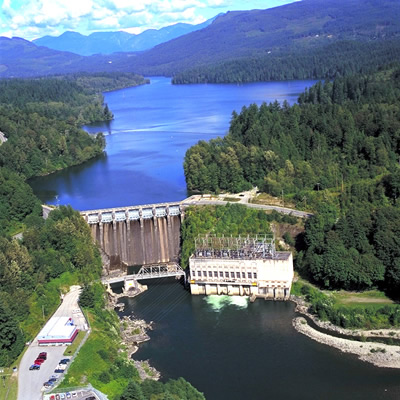
BC Hydro is investing $748 million over six years to seismically upgrade the 85-year-old Ruskin Dam and Powerhouse in Mission, BC. The project will enable the facility to withstand a one-in-10,000-year earthquake and continue providing clean energy to 33,000 homes for the next 75 years.
Keeping Vancouver Island lit
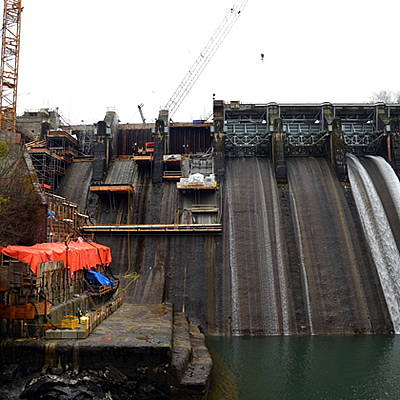
BC Hydro is undertaking a $1.1 billion, five-year upgrade of the 68-year-old John Hart Generating Station on Vancouver Island to improve seismic safety, reliability and environmental performance. The project will increase capacity from 121 megawatts to 132.2 megawatts when completed in 2018, powering 80,000 homes annually.
Discover by Category
Better Bathymetry - We Can’t Be Beached!
Amphibious and remotely operated, HELIX rovers capture high-resolution bathymetry data where traditional survey methods fail—shorelines, tailings ponds, and hard-to-reach waters.
Explore Better BathymetrySponsored by Copperstone Tech