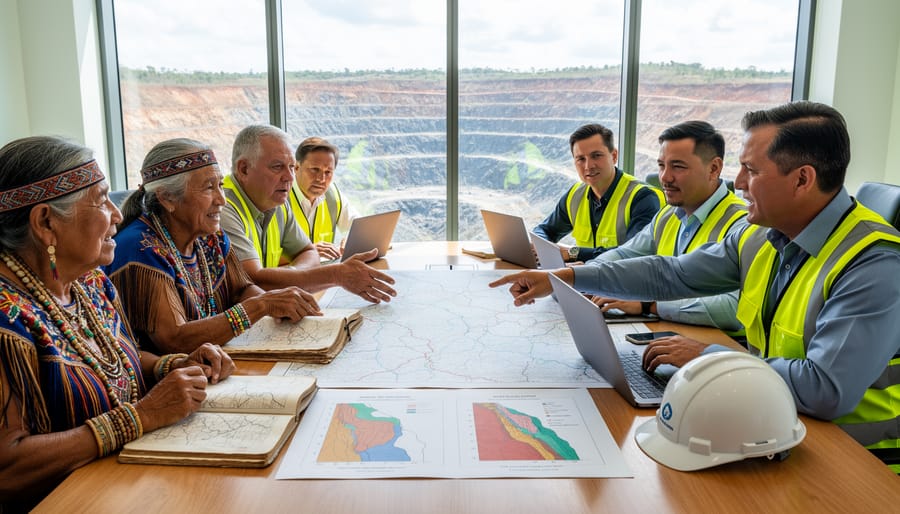
Canada’s Ring of Fire Returns to the Spotlight After PDAC 2026 The Prospector’s and Developers Association of Canada (PDAC), the world’s premier gathering of the global mining industry, has just concluded its annual convention in Toronto, drawing nearly 30,000 participants from more than 125 countries....
Canada’s Ring of Fire Returns to the Spotlight After PDAC 2026 The Prospector’s and Developers Association of Canada (PDAC), the world’s premier gathering of the global mining industry, has just concluded its annual convention in Toronto, drawing nearly 30,000 participants from more than 125 countries. As always, the event served as a barometer of the global mining sector. This year, critical minerals dominated nearly every discussion, and all eyes inevitably turned to Canada. Few countries possess the combination of political stability, geological potential, proximity to the world’s largest market, and technical expertise that Canada brings to the global mining industry. Despite the voracious global appetite for mineral exploration and development, Ontario Premier Doug Ford has been criticized by some for his extensive public promotion of the Ring of Fire mining region in northern Ontario, in the lowland approaches to James Bay. Many people were burned by the initial enthusiasm surrounding this area approximately 25 years ago and retain unhappy memories of unfulfilled promise. There has also been criticism that, apart from an immense and geophysically proven body of chromium ore — which could supply the entire world’s needs for a century — and some significant gold findings, there is insufficient certainty about what is actually there to justify the Ontario government’s enthusiastic promotion of the region. It has been argued that there is no shortage of chromium in the world at the moment and that, accordingly, the huge reserves in the Ring of Fire may be ahead of their time, possibly by many years. That opinion, however, fails to take account of the sudden realization by the government of the United States of the dangers of relying on politically unreliable — or even rival — countries as sources of strategic minerals. It also overlooks the resulting vulnerability of the American supply chain, which over the last 35 years has become inadvisedly dependent on China. Chromium is the basis of stainless steel, which is an essential component of almost everything, including anything of military significance launched into the air, the oceans, or outer space. It fulfills an absolute scientific and military requirement that is indispensable to the current and future security of the Western alliance. It is easy to overlook the role of resources in the strategic policy of the great powers, particularly during times of military conflict. Gradually, stainless steel — which is much stronger and more durable than conventional steel that rusts — will occupy as much of the steel market as supply allows. Whoever controls the world’s chromium supply will exercise enormous influence over the production and marketing of stainless steel. The current principal American sources for chromium are Turkey, Kazakhstan, and South Africa — all of which are distant from the United States, and none of which can be regarded as fully politically stable. The United States and China are in direct strategic competition for chromite, from which chromium is derived. They have the same needs and have both been looking for new sources of supply. As in so many other resources, Canada proves to be exceptionally well endowed, and China has been attempting to gain access to the Ring of Fire since 2011. The principal co-discoverer of this huge deposit in the Ring of Fire is the Canadian Chrome Company (CCC), a subsidiary of KWG Resources. CCC has developed a comprehensive plan for the environmentally responsible extraction and transportation of chromite to market, while also ensuring that the rights of the First Nations in the area are fully protected and meaningfully utilized. The company has already begun the process of transferring its claims to the transportation corridor to the affected First Nations and intends to share a portion of the net profit with them for the life of the mine. Disclosure: I am a modest investor in the company, but my motive here is the national interest, not personal gain — although I believe that gain will eventually occur as well. As the company revealed in a press release on Jan. 13, extensive discussions over a number of years with appropriate officials of the United States government demonstrate that the American administration is fully aware of the strategic significance of this ore body. Many readers will recall that I have sometimes lamented in this space that Canada’s economic performance has been uncompetitive throughout the Justin Trudeau era. We have exported more capital from Canada than we have attracted throughout that time. The greatest single problem is that our corporate income tax is substantially higher than that of the United States, and we have mistakenly hoped that our devalued currency would entice investors to Canada despite those higher tax rates. That policy has failed. Our comparative standard of living and capital flows have declined in lockstep with the falling value of our currency. We continue to slip down the list of the world’s most prosperous countries by per-capita income. The Justin Trudeau government seemed deliberately intent on discouraging our primary industry sector — that is, natural resources generally, and especially the oil and gas industries. What the world envies about Canada, and what it most needs from Canada, is that this country is a treasure house of almost every form of energy, forest products, base and precious metals, and non-tropical agriculture. Pierre Trudeau was, in many ways, distracted by the anti-growth pieties of the Club of Rome and, astonishingly for a man of such intelligence, did not fully grasp the importance and desirability of economic growth until its absence endangered his own political position. His son’s government inherited many of the same prejudices and inhibitions. But where Pierre Trudeau’s government wished to expand the oil and gas business while confiscating an unjustifiable portion of its profit for political redistribution, Justin Trudeau’s government appeared almost ashamed of Canada’s resources. It often treated them as a blemish on an imagined image of Canada as the pure snow maiden of the North, while also condemning them as an unacceptable contribution to its exaggerated vision of climate change as an existential threat. Providentially, there has now arisen an opportunity for this country to take a dramatic step forward in the sensible development of our natural resources — to the benefit of the Canadian economy generally, and specifically to the long-wronged and poorly governed Indigenous peoples of Canada — while also contributing meaningfully to the strengthening of Western security. On this matter, unlike what has happened so often elsewhere in the Canadian resource sector, there must not be any government fumbling, foot-dragging, or irresolution. Premier Ford deserves the commendation of all Canadians — not just Ontarians — for his timely and determined promotion of Ontario’s critical resources. Download the PDF here.
Aggregated Content
This article was imported from an RSS feed. Content and accuracy are the responsibility of the original publisher.
Related Stories
Sama Resources Inc. Provides Early Warning Disclosure Regarding Disposition of All Shares Held in Falcon Energy Materials Plc
1 hour ago
The M&E DISPATCH // 159
2 hours ago
Sigma Lithium Resumes Sales of High-Grade Premium Lithium Oxide; Closes Inaugural Sale at Plant of 400,000t of High-Purity Low Grade Fines Expecting a US$20 Million Profit
5 hours ago
Kirkland Lake Discoveries Announces Uplisting to the OTCQB Venture Market
7 hours ago
Westwater Resources Reports Full Year and Fourth Quarter 2025 Results
7 hours ago